Showing posts with label My Events. Show all posts

Friday, December 18, 2020

JASHN e DASTAAN e MUMBAI 18-20 Dec2020


The Mumbai Research Centre is pleased to announce that its three day festival Jashn e Dastaan e Mumbai starting TODAY will now be free for all citizens. We have received generous sponsorship and that has made it possible for us to remove the paywall.

We are thankful to our sponsors and ready to welcome all Mumbaikars to the festival of the stories of the city. Respective Zoom links for the three days are attached alongside. Voluntary contributions towars conservation and digitization of the library will be highly appreciated.

Friday, September 06, 2013

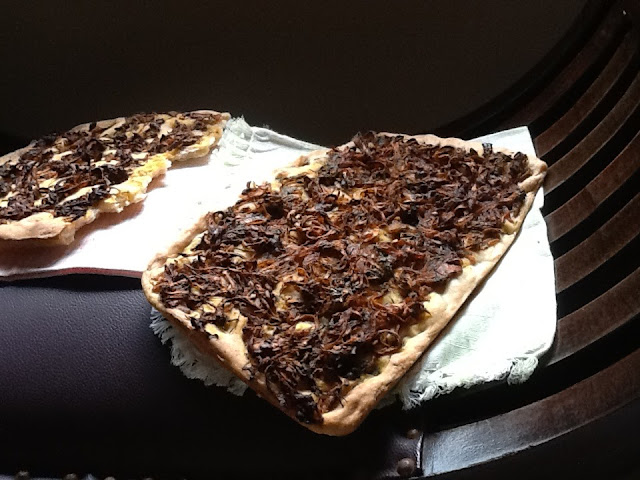
Focaccia and Koli Masala Love Story

 
Pithori Amavasya marks the end of Shravan Maas. It is a no moon day and celebrated as Matrudin or mother's day. It is celebrated as Matrudin as we worship all the Devis or Goddesses on this day.

The name Pithori is derived from the offering made with flour or pith to the Goddesses. Well to celebrate the end of Shravan and my event which began on a non-traditional note, after travelling thru memories of a more traditional Shravan, I post here an offering for my Mother, my Aai. 

I had made this Focaccia as an experiment to use my Koli masala in the most non traditional way. To create a fusion of flavors that will stand out as the mark of this city, Mumbai. What better time than to share it with you on this day when offerings are made to the ancestors, my Koli ancestors who were the first inhabitants of this city. The recipe adheres to the tradition of making something from Pith or flour. My Mom always offered ghaas or food offering to the departed on this day.

Going by how it turned out and that half eaten focaccia is proof enough to get you going into the kitchen to try it out immediately.

Ingredients

For the Koli masala spiced Caramelized onions
4 large onions, halved and slivered
1 teaspoon of Koli Masala ( Don't have it? Order it now!)
1/2 cup finely chopped cilantro
2 tablespoons Olive oil
1 teaspoon salt

In a hot wok add oil, quickly add the slivered onions. Fry until translucent. Add the koli masala and salt, give it a stir. In the end just before putting off the heat add the finely chopped cilantro and give it a mix. Keep aside to cool until dough is ready.

This is a basic recipe for the toppings but you could stretch your imagination to the limit to give it your own veg - non veg twists!

For the dough
500 gms of Maida/ all purpose flour
1 tablespoon active dry yeast
1 tablespoon sugar
1 cup warm water
2 teaspoon salt
1/4 cup olive oil
1/8 cup corn meal / makai atta
1/2 cup sun dried tomatoes

In a bowl mix the water, sugar and yeast and let it bubble up for 10 mins.

Meanwhile soak the sundried tomatoes in 1/2 cup water.

Now combine the flour and bubbly yeast in a stand mixer using dough hooks. Run the mixer till you get smooth well combined dough. Now add salt and 2 tablespoons of olive oil to the dough and run the mixer for another 5 mins. Cover with wet towel and leave it till the dough is doubled.

Remove the dough on to the counter. Knead for 5 mins. Incorporate the sun dried tomatoes in the dough at this point. Chop up the hydrated tomatoes into small bits. Discard any water remaining after soaking the sundried tomatoes.

Grease and dust the baking pans with oil followed by corn meal. Spread the dough in the pans with your hand like you do for bhakri. Create depressions with your finger in the dough. drizzle the remaining olive oil over it like seen here. Leave it to double up again.
Now after the second proofing. Spread the koli masala spiced caramelized onions on the two focaccias.  Preheat the oven at 180 deg celcius and bake till golden edges are seen. This takes about 40 mins. I baked both the focaccias at the same time in the oven. 
Remove from the baking pans on to the cooling rack. I ate that half as soon as it permitted me to take a bite. These focaccias are not very thick and are quite crisp. Every bite is fiery and a morsel of the sundried tomato delivers the perfect fusion of an Italian bread with a very local Koli masala.

If I say it was gorgeous! I will sound narcissistic, so be it.

Here is the ordering information for my Koli Masala.
Mail to :  annaparabrahma@gmail.com
Mail Subject: Koli masala
Payment can be made to paypal id : hrushikoli@gmail.com


Sunday, September 01, 2013

Vari Che Ghavane

Foxtail Millet Crepes


Yesterday was the last Shravani Shanivar. For all the Fasts till now We were eating Vari/ Samo seeds/ foxtail millet only as it is the healthier option. We avoided Sabudana or sago seeds as they are too starchy. I hope I have achieved some improvement in health and it would be indicated soon in my upcoming date with the Doc.

Well let me update here, to all the people who show concern about my health. I had my annual health check up done. Most parameters are normal except for the Vit D3. So a course of medicine has been started for correcting it. I am walking a lot more than May, June and July. Waiting for the stress test to get done in Sep so we'll know if the stents are working well. I have better health now since I cut out all the crap in life. Yes I am lucky that I have a cushy fall back system and I never take that for granted.

Coming back to Vari, a month of eating Foxtail millet only is definitely boring. I stuck to the jeera tadka and even avoided Potatoes. We would eat it with Danyachi aamti but I ensured that the aamti was watery to keep it light.

Yesterday I thought of trying something different and recollected that my Mum used to make these Crepes or ghavane with Vari. I soaked a cup of the samo seeds in curd and thinned it with a cup of water. This proportion makes only 3 dosa skillet size ghavane, which I wrongly estimated that would not be enough for 2 adults. I was wrong. These are really filling. I had therefore made Vari cha bhaat too, it was too much on the plate you see.

Ingredients

1 cup foxtail millet/ samo seeds/ Vari
1 cup sour curd
1 cup water
2 green chilies
salt and sugar to taste

Soak the foxtail millet in curd for 30 mins. Thin it with water and grind to paste. Let it soak further for 1 more hour.

Add salt and sugar to taste. Mix well before pouring the batter on the dosa tava. The batter should be thinner than dosa batter and it should be pourable.


Heat the skillet or dosa tava. On the hot tava pour out the batter with a ladle do not try to spread the batter like you do for dosa. Here the thin batter will give you a lovely lacy crepe and if you try to spread it, you will get clumps of dough. The pouring of batter is more like sprinkling the batter over the skillet so do it with a deft hand. Cover the entire area of the skillet for perfect shaped Crepes.

Drizzle some oil over it. Check if browned from under. The topside get dried out as foxtail millet is low gluten, but don't worry it gets cooked. Turn over and cook the other side. After five mins, fold over in to half and then again into quarter folds. Serve hot. 

I served it with a upvas peanut chutney that turned out so creamy tangy and excellent accompaniment for this dryish crepe. I am thinking a potato gravy would have been lovely too.

I am going to make this more often now on though I made this after years yesterday.

Thursday, August 29, 2013

Happy Gokulashtami! And Naivedya of Atte Ka Halwa.


Happy Gokulashtami ! Hope you are enjoying your Gokulashtami celebrations your own way. Here in Mumbai amidst din I am here to quickly post a naivedya I just made for Lord Krishna. Shh..Shh.. Also to inaugurate my new stainless steel cookware.

Last night was Krishna Janma or birth of Lord Krishna so I made Steamed Rava Ladu for naivedya. And today is Gopal Kala or Dahi Handi. I don't need to reiterate how this festival is celebrated here in Mumbai. This city has its two festivals when the citizens come out on the street and for this one shouting out Govinda Aala Re, Aala Jara Matki Sambhal Brij Bala! Here Bala means young woman, how endearing! Hope the days of that pure love and clean fun returns to this city. That's my prayer today.

Now here is the quick recipe of my second naivedya. This is a Rajasthani recipe which transforms the pantry staple atta into a delicious halwa with dollops of ghee. So be generous!

Ingredients


1/2 cup wheat flour / Atta
1 tablespoon + 1 teaspoon Ghee
1/2 cup sugar
1 pinch salt
Slivered pistachios for garnish

Washed my brand new 18/10 SS Kadhai (note that). Kanha it should taste better than my previous Aluminium Kadhai and also no farting now and blaming it on Al OK! :D

Ok what are you laughing at? heat that Kadhai. Add one tablespoon ghee and when molten add the wheat flour to it. Roast it till dark brown and aromatic. Don't roast it till caramelisation as the color intensifies further as we use sugar syrup to make the halwa.

While you are roasting the atta in a saucepan boil together 1/2 cup sugar and 1 cup water till sugar dissolves. This is your sugar syrup. Add a pinch of salt to bring out the sweetness of sugar.

Once the atta is nicely fragrant and golden add slowly sugar syrup to it. Keep stirring till the atta absorbs all the liquid and is plumped up. At this point at about 5 mins the halwa is cooked to perfection and will start forming a mass at the centre. Now add one teaspoon ghee to give it a glaze. Keep stirring.

Finally garnish with slivered pistachios.

Tastes best warm.
And here is scene on my street.

.

Monday, August 26, 2013

Daar Paanache Bhajji


My Paternal Grandma was a petite and beautiful woman. As much as she was known to be a beauty she was known to be kanjoos or stingy by her kids. Even today Dad and Uncles narrate how she shallow fried fish in the tiniest bit of oil and while doing that she would make the entire household cough up. So her kids loved to call this style of cooking 'Tal-bhuz' which translates to half frying and half roasting and they did coin that word!

The same children reminiscence over Shravani Somvar of their childhood when Grandma would have head bath and go to our Family God's house pray and then go to the bazaar to choose the best bunch of 'Daar bhaaji'. 


The afternoon would be spent cleaning it carefully, most of it would be chopped fine to make a stir fry with either green or red chilies and some leaves would be kept away. All the children starving by then would get excited. They knew their mother was generous on Shravani Somvars. Grandpa and her children nodded in approval and winked at each other for they knew what she would make.


Such simple pleasures but deep frying was not so common at home in those days atleast not in our home. When I look back I realise how conscious my Grandma was about what she fed to her kids and when.


So on Shravan Somvars when the sun is going down, Piri (flat seating platforms) which are also called Paat in Marathi, Piri is plural for Pira in Koli; would be laid out in two rows with some space for movement between the two rows. She would then place one by one a Dinda leaf in front of each Pira. After serving all the food perfectly in order the way it should be on the leaf with the chutney on top, veggies on the right, rice in the middle and chapati or Ghari on the left. She would then call out to the husband and children to wash their hands and seat themselves. They would obey immediately and then she would rush to the kitchen as they chanted the prayers to rustle up the star of the menu, to fry up the Paanache bhajji! 

The Daar bhaaji or Lal MaaTh leaf bhajji turned out crisp and were served to the groaning stomachs in the Pangat (a way of seating in a line at lunch or dinner just like sitting at a dinning table,  it's a formal affair).

Grandma always kept the bhajji batter ready, the leaves washed and cleaned and drained well to serve hot crisp bhajji and then she would announce. 'Suru kara!' her kids always took that as a command 'Attack'. 

My Shravan series cannot be complete without a post on this Paanache bhajji. It's a simple recipe but you have to be a skilled cook to know how to turn them out best. The batter coating has to be gossamer yet the leaf should be fried to crackling crunchiness. The veins of the leaf forming a pattern on the batter. This recipe and skill is handed down by my Grandma to all her DILs and from them to us grandchildren. I made them after years and as I did a few I was wondering why they did not look like my Grandma's, of course then I thinned the batter a bit and the third bhajji onwards I had a perfectly crackling leaf bhajji. 

As far as I can remember this is the only recipe by my Gradma that is treasured in the family more for the lovely memories than anything else. Also Shravan as it is the monsoons was the only time she would get time to cook elaborately for her family as it meant four months of break for the fishing season. The kitchen was completely her domain then when all domestic help was on leave. My Grandma, Yesubai, was a Nakhwin, co-owner of a fishing business and had to run a household of family plus 25 to 30 employees plus more on the fish drying fields. She personally made Chavalachi roti for the staff and family every morning with the help of one of our Khapnarin (see how evolved that word is, not servant but someone who does hard work!) She never had the luxury to make goodies except for the basic meals. Plus even the staff was better skilled for fishing related activities so all the goodies were made by the village goldsmith's wife. Yes Kolis were a tribe and yet so evolved, our women were working and heading businesses since generations. A Koli woman was expected to know only the basic cooking to run a home and the rest was always delegated.


So finally here is the recipe of the Daar Paanache Bhajji


Ingredients 
10 Daar bhaaji leaves
1/2 cup besan/ chickpea flour
Salt to taste
1 teaspoon rice flour
1/2 teaspoon red chilli powder
1/4 teaspoon carom seeds
1/4 teaspoon turmeric powder
Enough water to thin the batter.
Oil to fry

First wash clean and drain the leaves. Dab them with a towel to remove all moisture.

Now make batter with besan, red chili powder, turmeric, salt, rice flour and carom seeds. Make it to a consistency that coats the leaf evenly yet is thin enough to let the leaf see thru. It should be gossamer is what I mean. Thick coats leave the leaf soggy inside. The only way to get a crunchy crisp  leaf is to coat it perfectly which lets it fry well thru and thru.

Deep fry in smoking hot oil till crunchy crisp.

Take a bite when it's fresh and hot. Serve instantly as a start to a meal or with your evening Chaha. Enjoy the rare indulgence of the deep fried, that's what my Grandma would have surely said but for her children this bhajji is about Shravani Somvar and never demand it any other time.

Friday, August 23, 2013

Changing Of The Sacred Thread


Don't be surprised. No Kolis don't wear sacred threads. Kolis are a tribe and therefore outside the caste system as per the ancient scriptures. 

My father has a fascination for rituals and is very religious. He was brought up in a different era so he always looked up to the Brahmins. I must mention deliberately our generation does not care a damn about the caste system, especially in Mumbai but it is definitely prevalent in other parts of India and is practiced even now.

Dad is friends with a Brahmin who is a practicing priest. He gifted my Dad the scared thread for the first time about a decade or more ago. Dad is like Eklavya and has learnt to perform some complex rituals, he does Rudra every single day. For Ganapati pujas he does Atharvashirsha. He also performs the Pavman on the important days in the life of our Guru Brahmachaitanya Gondavalekar Maharaj. This priest knew about my Dad's keenness in following Vedic rituals so he encouraged my Dad to wear a scared thread. Dad does the rituals only for himself and family and has performed on a rare instance for friends.

The sacred thread is symbolic of purity in thought, word and deed expected from the wearer. Any one who pursues knowledge and the Vedas can wear it. Anyone who pursued knowledge was called a Brahmin in the ancient times so the sacred thread came to be a mark of the caste in the later eras too when pursuing knowledge is not the only thing they do. Certain other castes adopted this practice. The initiation of a boy into the path of knowledge is celebrated with a ritual of Upanayana when he first wears a scared thread across his torso from left shoulder to right flank. Following the Upanayana the boy gets permission to do Sandhyavandana and Chanting Gayatri mantra. He has to practice this every single day. Obviously the sacred thread gets worn out and needs a change.

Shravan is the most auspicious month for the Hindus and the NarLi Pournima is designated as the day for changing the scared thread and renewing the vows of pursuing knowledge. Infact the scared thread is also called Shravani to distinguish it from a change at any other time.

This is only a decade old tradition in the family and only Dad follows it. I find it quite funny why Dad started this new tradition that will end with him.

What will be preserved I am hoping by my family and future generation are the traditions of Kolis. We are Koli and my bro S without fail offered a coconut to the sea, thanking the Gods for toning down the ferocious waters which are characteristic of monsoons and now the brotherhood can go out to the sea for fishing safely.

Here are my old posts on NaraLi Pournima and the specialities we Kolis make on the day.


NaraLi Bhaat


Chaurichi Karanji

Friday, August 16, 2013

Nagpanchami in Thal

Mixed boiled beans a Nagpanchami special in Thal which after naivedya are made into a usal.

Last Sunday was Nagpanchami, I had almost forgotten it as I was on my way to Thal. In the village where ever I went I was welcomed with Undre/ Modak and mixed boiled beans.

On the fifth day of Shravan the snakes are worshipped in Hinduism. The snakes control rats from proliferating and destroying crops hence they are paid respect. It is a practice to do a small puja and offer milk and other offering to a snake. Villagers pray to the snake that we will offer you once in a while some offerings but don't show yourself to us. 

Unlike the cities where snakes are brought packed in baskets from the villages by snake charmers in an attempt to earn a buck by letting people offer milk to it. In the village the offering to a snake are left near the holes where a snake is known to reside  or it is left simply somewhere in the yard around the homes for the snake to feast at its convenience and freedom. City dwellers like us should discourage the snake charmers by not giving them money and telling them not to catch snakes and not to bring them to the city, where they get killed due to bad handling and being pulled out from their natural habitat.

On Sunday someone spotted a snake in the rocks on the seashore and spread the word. Everyone was warned to be careful. Also the poor snake survived because it was Nagpanchami else it would have been killed.

In the evening I was served food by my gracious cousins. This was a Shravani meal and so was served on a Dinda leaf and not the usual banana leaf or patravaLi. I am not sure what Dinda is called in English neither do I know the botanical name. However to describe it, a thick, large, dicot leaf it is. 

After the meal I went for a long walk along the seashore sans my iPad so no pictures of the beach but I realised that it was a good idea to leave it behind for it turned out to be a surreal experience. When you are on the seashore at dusk after sun down all you see is the Arabian Sea on one side and the palms, screw pine and conifers on the other side. You see the ferocious waves lapping and the sounds cut your thoughts and you want to sing along to the tunes of nature. The clouds were dark and I could see the rain approaching from sea as the Khanderi and Undheri forts became hazy. It was a light drizzle that livened my spirit, I increased the speed of my footsteps homewards and sang to the music of the rain, the waves, Garjata Barsat Sawan Ayo Re ~ ~ ~


Some scenes from Thal that are so Shravan Maasi.


A pile of wood collected during summer to be used in the monsoons.
Overgrowths surround homes, women relax and it's an unhurried pace of life as the fishing is closed in this season.
The chool gets moved from the seafacing backyard to the OTi, it is just impossible to light a fire in the backyard with gushing winds.
Nirmal Tai posing with my newest nephew.
Ghana Barse~ ~ Shravani clouds laden and low.
New boat waiting to meet the sea after Narali Pournima.

Thursday, August 15, 2013

Importance of Guruvar

Thursday is dedicated to the planet Guru or Brahaspati. The planet is associated with the Guru of the Devas in Hindu mythology, he the chief priest Brahaspati. He is worshiped for good luck.

This day is also the day of  Dattatreya or Datta Guru. In my family my grandma worshipped him and so we inherited the worship. My Aai was passed on her Vrat, it's a tradition where the senior lady in the family if is unable to continue fasting hands over the tradition to a junior family member.

My mom would wake up in the morning have head bath and do some reading about Datta Guru before going about her usual routine. Thursdays in Shravan was always special, even though it is not  part of the Shravan fasting tradition. She would cook the fasting meal of either Sabudana Khichadi or Bhagar (samo seeds) and peanuts curry. On all other Thursdays through out the year it was just Doodhatli Poli with Banana.

I remember my mother doing Guru charitra parayan some times. My uncle MJK and Aruna Kaki have done several parayans after having bath and sitting with wet clothes till the reading is complete. It is a very difficult form of penance in the modern day. Doing a parayan in a single day itself is an overwhelming task and that too with wet clothes! So you know why I have not gone that way.

Though I enjoy doing all the Upvas and cooking food related to the Upvas, I am hardly a religious person. I might be spiritual though.

Wednesday, August 14, 2013

Three Techniques For Cooking Samo Seeds Or Vari


Samo seeds or Foxtail millet or Vari is a largely popular seed consumed as replacement for rice during fasting days. We are past the first Shravani Somvar and Shanivar and so here I am publishing this post while it is still useful thru the month long fasting.

In Marathi the uncooked seeds are called Vari and the dehusked, cooked version is called Bhagar. It is also known by the name Vari cha bhaat.

The seed has a yellowish golden husk which is removed and the white gritty Samo seeds are cooked in water. The cooked samo seeds when fluffed look alike to semolina.

I like to cook my samo seeds with bits of potato but you can cook without them.

What prompted me to write this post is queries from family if samo could be cooked in any other way than the traditional 20 min cooking over a gas stove. Some trick to cut time for someone rushing to office after cooking the regular meal for a family and her fasting meal plus packing it for lunch. You see every minute counts in Mumbai.

So here you go you superwoman who juggles so many responsibilities in a day and yet follows traditions with new outlook.

Method 1:Gas stove top cooking

Heat pan. Add 1 teaspoon ghee. Once molten add 1 teaspoon of cumin seeds and chopped green chili or two. Optionally add diced potato to it. Anything with potato tastes good and its also permitted for fasts. Wash 1 cup of samo seeds. Put the washed seeds into the pan. Coat well with the ghee and cumin seeds. Add the salt and then top up with water. For Gas stove top cooking I use a 1:3 samo seeds to water ratio. Cover and cook till done. The well cooked seed is plump and translucently pale. If the grain is still white it means it is uncooked. Press grain between thumb and first finger to check if cooked thru. This would take about 20 mins to cook well.  See the first picture of Gas stove top cooked Samo seeds.

Method 2:Cooking in the pressure cooker: 

Make the tadka like above. Then add the washed foxtail millet. Top up with 2 times the water and salt. Close the pressure cooker lid and allow just 1 single whistle. Switch off heat. Cool completely. This should take about 10 mins. When I pressure cooked it I added a handful of peanut powder to the rice before fluffing it. This gives a lovely nutty flavor to the rice.


Method 3: Microwave cooking:

In a MW safe dish add ghee, chopped green chilies and cumin in the same proportion as mentioned above. Zap the tadka in the MW for 30 secs. Add the washed samo seeds. Mix well. Add water about 2 times of the Vari and salt. Cook in splurts of 2 mins, stir and put it back. In all cook for 7 mins with covered lid. Again here I added some peanut powder for taste after cooking.


Always fluff up the cooked Bhagar or Vari cha bhaat before serving.

Over the weekend I was in Thal and I have some pics to share and narrate how Nagpanchami is celebrated there. Do come back. I encourage you to share your stories of Shravan too.

Saturday, August 10, 2013

Shravani Shanivar


Photo credit: Abhay Inamdar taken at Shani Mandir, Gondavale

Saturdays in the month of Shravan are designated as important days for fasting. Shanivar is the day of Lord Shani. The planet that represents Shani is Saturn. All the mistakes man makes or if somethings go wrong in life one can safely blame it on this God. Hinduism plays on psychology and allows one to unburden and also encourages very positively to let one take control of ones life in these simple steps which are symbolic and these techniques work!
  1. Detoxify by fasting
  2. Worship The Lord Shani
  3. Lead a fresh new life
It is believed that if The Lord Shani casts his Vakra nazar that is if he is cross with you then you suffer in life. So if there are legends and if there are believers there is also a solution provided for cleansing.

So how do you worship The Lord. 

  • Visit the Shani temple.
  • Offer oil to The Lord Shani : The oil is poured on the idol it is believed to cool him.
  • A few whole udid seeds are added to the oil. As black is associated with warding off evil.
  • Black clothes are worn on this day for the same reason.
As for fasting pattern as is prescribed for Shravan, solid food is not consumed from Dawn to Dusk. Liquids can be consumed. After dusk a full meal can be had. In most homes a Shravani meal is special and therefore elaborate.

Many people are unable to do the strict dawn to dusk fasting and therefore have Faral or light eats which are foods different from daily consumed ones, like Samo seeds, Sago, Rajgira etc.

Today is the first Shravani Shanivar, are you fasting? If you are looking for ideas for Feasting as you Fast, I have a label Upvas for you.

In the upcoming post I shall present "Three techniques for cooking Samo seeds or Bhagar". Don't miss it.

Friday, August 09, 2013

Shachi's Shravani Memories


If you like this. Go like Shachi

Shachi, to us was our Head girl's little sis in school. Like her name she was this beautiful girl, just like Goddess Indrani. Infact I remember learning Lord Indra's wife name because of Shachi's. If you ask any Annite they would have expected Shachi to follow in her father's footsteps into IAS, we knew her as the younger daughter of the Municipal Commissioner in the years well after school. Then one day she commented here


There was a gap, like it happens with schoolmates who were a batch before and after. Then one day, I was amazed by a sketch on FB. It was vivid and child like innocence reflected in it. The detailing blew me away. A 'tap' later as I landed on the page, I was pleasantly surprised.


I found Shachi the artist! I connected up again with her. I love her work and thought you would love it too. So here she is writing about her not religious yet all the memories of Shravan and the happiness one associates with it. Though archetypal this is what makes Monsoon memories of true blue Mumbaikars. I am glad she is sharing one of her self portraits and memories with us here. Thanks Shachi!


What a good start to our Shravan Maasi Harsh Manasi event!

"I was asked by Anjali, to send her a little note/recipe that showed how I celebrate Shraavan Maasi rituals. I had to pause there for a bit and wonder…were there any rituals? I didn't know! My house was rather non-traditional and we didn't follow too many religious rituals. I tried to think back to the good old Mumbai monsoons. As a student at St. Anne's high school, monsoon rituals involved getting ready for school, making sure I DIDN'T wear my socks, but took them balled up in my bag…because even a mild Bombay rain means getting your socks wet as you walk through the puddles and splashes made by cars on your way to school. The smell of that intensely plastic raincoat…making you feel hot and muggy inside, but not really doing a great job of keeping you all dry. The horrible duck-feet like black rain shoes that I despised, because they never fit my very narrow feet. Getting to the class room and defeating the purpose of carrying dry socks, by wiping your wet feet with them before putting them on! The wet umbrellas everywhere and the damp feel of wet sleeves and hemlines. But when it rained outside while class was on, it felt like some exciting adventure. Like we were marooned on a great ship with waves lashing the rocking boat. It was day-dreaming weather! It just didn't seem right to listen to the properties of Hydrochloric acid and crops grown in Gujarat.
The first rains of monsoon meant gathering up all the like minded pals from the building and going down to get wet wet wet! Then walking in the rain to Nariman Point, to have hot bhutta. Watching those red sparks glow and fly off the coal and waiting to get your turn for the perfect monsoon combination….dark clouds, rain, bhutta and great big waves crashing against those odd tetrapods near NCPA. EIther we could add in a garam cutting chai…or then just head home, giggling and gossiping, wet and happy. Then the rush to get home and dry off. Snuggle under a razai and re-read the gloomy romantic Wuthering Heights while waiting for mom to come out with kanda-bhaji, and chaha with aale (ginger)! I also loved bananas fried in the remaining batter. They were crisp on the outside and warm, sweet and soft on the inside.  
Monsoon in Bombay meant sitting in my balcony watching the soccer players on the football field get so muddy it was hard to tell who was in which team. Watching the huge rainclouds come slowly over the Taj, and move over to the High courts and Rajabai Tower. The gradual drizzle that got so thick, you could hardly see a few feet away from the building. The circle of light that shone from the street light, highlighting only the raindrops as they passed under. The majestic gulmohar trees welcoming the rain.  
Later of course there was the damp walk to Churchgate to get to work. The even muddier walk to Bandra station and the long wait in the line for a rickshaw. The need to sit in the middle of the rickshaw to avoid getting splashed by cars. My lovely cozy (because it was about 10 square feet) office, where we made hot chai from the electric kettle, accompanied by too many milk bikis to be good for us. The tiny ancient radio that played bhoole bisre geet…or Jeeturaj on FM, while we designed fun things for MTV. Walking back home from Churchgate late at night in the rain. Enjoying the solitude and getting a thrill every time, out of walking down a gulmohar shaded lane, past old art-deco buildings with names like Sunshine and Moonlight. Watching cheesy baarish songs on TV ('dekho jara dekho barkha ki lladi'…and 'rain is falling chhama chham chham'! and DDLJ with Kajol cavorting in her little skirt in the rain :D, along with the classics…Raj Kapoor and Nargis under an umbrella, 'Rim jhim gire saawan', with young brooding Amitabh Bacchan. 
I have no memories of religious rituals we enjoyed during the monsoons…but all these were my monsoon rituals, the memory of which still make me nostalgic, as I write from a hot desert far far away, where raindrops almost evaporate before they hit the ground and the rain is never hard enough or long enough to recreate those wonderful memories."
Shachi

We all follow our own Shravan maasi rituals like her when young. Of kanda bhajji, alyacha chaha, bhutta and snuggles under the blanket!

Then we are in a phase is life when we start becoming religious and start adoring those other rituals. Looking forward to hear from more of you what Shravan means to you and how it is celebrated in your homes. Do drop your comments here for Shachi.

Wednesday, August 07, 2013

Shravan Maasi Harsh Manasi!

This is the opening line of a very famous poem in Marathi. Indeed there is so much to feel happy in the month of Shravan. The month that is densely packed with festivals.

Today is Shravan Maas Shubharambha! The beginning of the auspicious month of Shravan. It's the month of observing abstinance, detoxifying, rituals and numerous festivals. Now that I am in Mumbai and I am experiencing the monsoon is in full swing, it's this time of the season that you see the play of sun and the clouds, as they hide and seek. It is the time of the year when everything is washed clean and lush green. You feel a certain purity in the air. I am flooded with memories from the past, of the women at home fasting, my uncle PJ not shaving, of visiting our favorite Shiv Mandirs on Mondays and Shani Mandirs on Saturdays. Of all the festivals Marathi and Gujarati that have been part of me in my growing up years. As a Marathi I celebrate most but I sorely miss Shitla Satam celebrations which were part of my growing up years in Fort. 

Every community has their own ways of celebration and there is always specific food associated with the rituals. I invite you to share how this month of Shravan is observed in your family. Send me your post at Annaparabrahma@gmail.com

I am keeping the rules simple.

1. Share how you observe the month in your family.
2. Share a special recipe that is made in this auspicious month. Include a picture.
3. You can post a parallel entry on your own blog and link to this event page.

All entries are welcome but unique entries will be published on Mondays and Saturdays as these are the specified fasting days for this month.

Celebrate the cheer this Shravan!

Saturday, September 03, 2011

Ganpati Kavach at Dive Agar

This is a mask of Ganpati idol or as in Sanskrit, it is a kavach that must have decorated a stone idol. It is made of 24 Karat gold and weighs1.325 kgs. It was excavated from a bettlenut orchard in Dive Agar by Shrimati Draupadi Dharma Patil. The copper casket that contained it has a inscription of  Friday,10th Nov 1060. This mask therefore dates to an earlier date is what is common sense. Just this reference makes it atleast 950 yrs today. It must have been buried for safe keeping during the downfall of the Peshwas. Note the simha or lion on the crown which indicates it could have been crafted in the south. The Son-Chapha flower on the forehead and the ears is so distinctive. Also the mango bugdi (ear accessory) and the shoulder is worth the note. This picture is a souvenir from the trip to Hari Hareshwar and Diveagar with family. Some things you share at the right time so here it is for your darshan in this season of the Ganpati festival.

As promised here is Deesha sharing the naivedya of Chakli her MIL made for Ganpati. This shot of Chakli with the brass Pali/ spoon used for tirtha makes it look divine.

Chakli for Lord Ganesha


Tuesday, August 30, 2011

Event : Come Celebrate Ganesh Chaturthi With Me

Yesterday at work it was announced that 2nd Sep will be compensatory off for which we will work on the 17th. At first I was completely lost, what do I do for 5 days? The 31st and 1st were known holidays. My friends started suggesting options, some were sweet to offer an invite to their home. My elder bro Vijay called up to ask if I was coming home. I did not want to do any of it, I mean I might visit friends here if I feel like but I was not going home, 5 days is just not enough and with this short notice it is impossible to travel. All modes of transport are already full. I don't have a permanent driver now, so no more travels on a whim. I thought it would be a better idea to celebrate Ganesh Chaturthi with you, my blogger buddies.

No rules for this event, all you have to do is just link to this post. I shall collate all your posts and flash them all through the Ganapati festival till Gauri visarjan. I am looking at atleast 21 darshans so include a picture of the Ganapati in your Pooja or home.

Entries will be accepted till : 8pm on 6th Sep. 

Come lets celebrate and spread  the cheer of Ganapati Bappa Morya!! I am very excited. Hope you are too!

On Trail