Showing posts with label Temple Recipes. Show all posts

Thursday, July 21, 2016

Hirvya Vatanya cha Masale Bhaat


Masale bhaat is the one pot quick rice that is churned out in 20 mins with a pressure cooker, a whistle or two in many a Maharashtriya home in modern day. It is a must on a wedding menu. We love it anytime. Gone to the doctors, come back home and make masale bhaat. You have unexpected visitors, the quick and tasty masale bhaat is ready to serve. Running short of other things on the party menu add a masale bhaat to it. Its that easy to make.

This Hirvya Vatanya cha Masale bhaat was made for lunch yesterday. I was dead tired from a super difficult Tuesday when we spent 4 hrs each way commuting from Nerul to Churchgate. The morcha protesting the demolition of Ambedkar Bhavan had brought South Mumbai to a stand still. We were unfortunate to have a docs appointment on the day. Anyways got a second opinion on Dad's cardiac condition and its a relief to know that surgery is to be avoided as of now. He is 75 and quite fit otherwise. So Wednesday morning I slept in, believe it or not Dad let me do it. Then at 11.30 am I woke up and by 12 noon we were eating a warm Masale bhaat.

I usually use untoasted masala for my masale bhaat like here in Toor Masale BhatMany times when we don't have the Kachha masala ready I use my Gondavale Goda Masala for a quick one. However this time I ran out of it. My friend Soumitra Velkar had gifted me the Parbhi Sambar Masala and it smelt so similar to my Gondavale Goda Masala so I thought let me try a Masale bhaat with it. No surprises the Masale bhaat turned out perfect.

Here try it out and you have two options for the masala now.

Serves 2-3

Ingredients

250 gms Wada kolam rice, washed
1 cup fresh green peas shelled or frozen/ Hirve Vatane
1.5 teaspoon Parbhi Sambar Masala OR Gondavale Goda Masala
2 tablespoon oil
1 teaspoon mustard seeds
0.5 teaspoon turmeric powder
2 green chilies slit
salt to taste

Heat oil in a small pressure cooker. Splutter the mustard seeds and let in the green chilies. Add the Hirve Vatane and washed rice. Add the Parbhi Sambar Masala OR Gondavale Goda Masala and turmeric powder. Add salt without forgetting. Add water according to the quantity of rice and close the lid. Allow 2 whistles. Put off the cooker and allow to cool completely before you open the lid.

To finish
1 teaspoon ghee
2 tablespoon jaggery
1/2 cup grated coconut
1/4 cup fine chopped cilantro

Open the lid of the cooker. Fluff up the rice. Sprinkle the jaggery. Drizzle the ghee over the rice. Top with grated coconut and chopped cilantro. Give a nice mix. Serve hot with roasted papad, pickle and buttermilk in summer or a warm Tomato/ Kokum/ Chinchecha Saar in the cooler climes.

Enjoy this very fragrant Hirvya Vatanya cha Masale Bhaat !

Thursday, April 24, 2014

Gor Papdi


Flash back to the days in Fort, there is a Jalaram Bappa and Ambe Mata temple in the building opposite my home. The bhajan is in full swing, me standing at the window and sticking out my head as a kid and there is a promise of Gor papdi prasad. Dad warns not go down at night. So I tell Ji, my grand old neighbor that if she goes down to the temple to get prasad for me. I tell Bharat to keep prasad for me. Ensure I get atleast one pudi of prasad (wrapped in newspaper).

Next morning we go to the temple and the potbellied pujari hands me a packet. Thrilled to bits I rush up and nibble the small piece. Then Ji asks if I want the prasad and I happily nod a yes. Bharat too ensures he drops in prasad at my home along with the milk bottle he drops everyday.

At another time Mom is discussing what to make as travel snacks for us to take on our yearly trip to Ganagapur-Akalkot-Gondavale and Kaki, Rajput suggests that we make khari puri and Gor papdi. So the two of them decide it would be made in the afternoon. Kaki would teach my Mom.

I would be pottering around and listening to Kaki's stories of travel. This image of gor papdi tied up in a cloth potli has stayed in my mind. Of the travelers eating it under the tree and drinking water from a kamandalu.


Flash forward to now. For our family trip to Gondavale besides many other things I made Gor papdi. This traditional sweet is made from pantry staples and gets done in less than 30 mins.

Ingredients

1 cup whole wheat flour
1/2 cup ghee
1/2 jaggery
1/8 cup water
5-6 cardamoms 
2-3 tablespoons poppy seeds

(This recipe can be doubled or tripled in all proportions very easily. I used 3 cups of wheat flour for the tray of gor papdi you see in the pics.)

First grease a plate and keep it ready.

In a kadhai heat ghee, once molten add the wheat flour slowly to it. Keep mixing and stirring till the wheat flour is browned and smells nutty. 

Meanwhile separately in a saucepan add the water and jaggery and heat till it dissolves completely. 

Pour the jaggery liquid into the ghee roasted wheat flour. At this point use the seeds of cardamom after crushing them. Stir till it starts leaving the sides of the kadhai and forms a mass at the center. About 5-6 mins.

Now transfer the mass onto the greased plate. Even it out with a katori. Sprinkle poppy seeds. Level it well. Let it set a bit and then cut up into pieces. Let it cool completely.

Once cooled pack it into a box. It stays fresh for 15 days. 

That's a healthy and nutritious snack for you better when you travel excellent for hikking trekking trips.


Sunday, April 20, 2014

Kancheepuram Idli


Like a reader commented on FB, I am here with another 'divine recipe'.

I have recieved the Kacheepuram idli as prasad on couple of occassion. This variation in idli I have eaten was the Rava idli with a tadka, called as Kancheepuram idli. Only after tasting the real temple prasad did I know the difference. However recieving it as prasad meant I got the idli after 1-2 days in transit so not as a fresh one. I wasn't really impressed but then when you have a whole lot of Tamil friends saying praises of the Lord Varadarajaperumal and the idli offered as prasad then your curiosity peaks. 

The Sitemeter on this blog brings in loads of info and insights. One such was this link to an old article in The Hindu that explored Tamil Nadu and finally attempted to decode the Kancheepuram idli.

Of the recipes on that link I refered to the original temple recipe and since it did not mention the amount of Urad Dal I used my own experience from the memory of the taste to arrive at the quantity. This temple recipe is for a very large quantity in kilos so I have adapted it for cooking at home. I have gone for 2:1 ratio for Rice and Urad dal.

SRI VARADARAJAPERUMAL TEMPLE RECIPE
(To make 10 idlis)
IngredientsRaw rice 2kg, Urad dhal kg, Methi 25gm, Pepper 100gm, Jeera 100gm, Dry ginger 100gm,Asafoetida, Curry leaves, Ghee 800gm, Salt
Method: Soak the rice, urad dhal and methi for an hour. Grind to a rough consistency. Add salt and leave overnight. In the morning, add pepper, jeera, dry ginger, asafoetida (all without tempering), sautéd curry leaves and ghee. Mix well and cook. It takes about an hour to cook.
At home, in a cooker it may take only 15 minutes. Place pieces of mandharai leaves on the idli tray and then pour the batter.
I don't know what are Mandharai leaves. Hope you readers can enlighten me.


My Recipe 

2 cups Raw rice 
1 cup Urad dhal 
1/ 4 teaspoon Methi 
1 tablespoon Peppercorns
1 tablespoon cumin seeds
1 tablespoon Dry ginger powder
1/ 2 teaspoon Asafoetida
1/2 cup Curry leaves
1 tablespoon Ghee
Salt to taste


Soak the rice and dal together along with methi for 1 hour. Grind to coarseness with enough water. Add salt and let it frement overnight.

The next morning. Crush the peppercorns and add to fermented batter. Add the raw cumin seeds, dry ginger powder, asafoetida into the batter.  Now temper the curryleaves in ghee and add the batter. Mix well. 

Oil plates and pour the spiced batter into the plates. Steam for 15-20 mins in the cooker. 

Demold. Cut up into quarters and serve with an array of chutneys. I made two, coconut cilantro and a tomato chutney to serve on my plate.

Sunday, April 13, 2014

' The Aamti ' from Gondavale


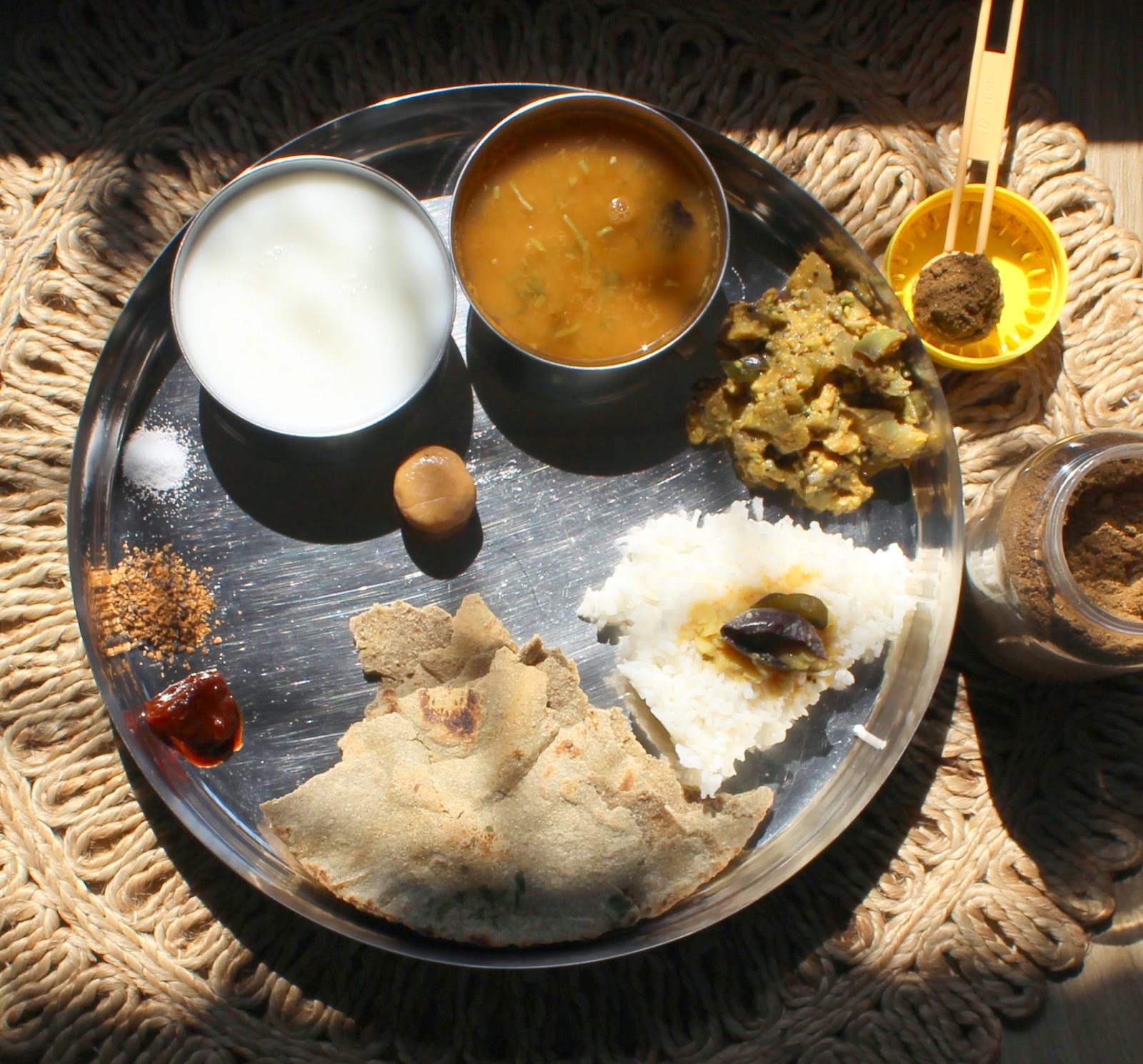
A typical meal at Gondavale temple would be Bajarichi Bhakari, Bhaat, Brinjals with crushed peanuts, Aamti, buttermilk, salt on the side, Khuraasnichi chutney, Spicy lime pickle. The Kandi peda in the middle is a Satara special that is offered at the temple.


Gondavale is where my family's faith lies. It is a small sleepy village that comes to life only when there are certain festive days like Ram Navami, Gurupournima, Shree Gondavalekar Maharaj's punyatithi etc.

Shree Gondavalekar Maharaj is the saint who was born there and in his life time he helped people find the love of God through chanting the divine name. He propogated the "Shree Ram Jai Ram Jai Jai Ram" mantra. Today there is a Samadhi Mandir and a trust that manages it. Read more about it on my travel blog, Swachchanda.


Shree's family was the Kulkarni of Gondavale. In his times whenever there was drought he would start some project in the village and provide food to the villagers. Most times it would be a Bajarichi Bhakari with spicy aamti. This aamti continues to be made in the Kitchens of Gondavale Sansthan and is served to 1000s of pilgrims every day along with the meal. There are many stories of miracles that people narrate on consuming the aamti. That is people's strong faith. We love the aamti so much that when we were kids we would drink dron-ful / Leaf cups full of it, guzzle it up when the volunteers came towards us to serve.

It is much later that we started making this aamti at home when we decoded the ingredients and were able to source the special blend of Goda masala from Gondavale itself.

This Gondavale Masala as we like to call is available on my E-shop. It is a fragrant masala and has a satvic taste that it imparts to the food. It can be used for curries and Masale bhaat but the best use is in this aamti. The sweet, tangy spicy aamti can liven up a simple meal. 


Not only the devotees and pilgrims who have tasted it but also many who have heard about it would like to have it decoded. While temple recipes never taste the same at home for two reasons, one the mass proportions in which it is made and above all the blessings of the Lord!

Yet I am trying to put down a recipe that I feel is very close to the original and that I make often in my own kitchen. 

Ingredients

1 cup cooked dal
4-5 kokum or 1/8 cup tamarind pulp
2 teapsoon oil
1/2 teaspoon mustard
1 tablespoon Gondavale Goda Masala
1/2 teaspoon red chili powder
1/2 teaspoon turmeric powder
1/2 teaspoon asafoetida
2 green chilies slit
1 sprig of curry leaves
2- 3 tablespoons crushed jaggery
salt to taste
handful of cilantro for garnish

Heat a deep pan add oil and splutter mustard seeds in it. Add the asafoetida, follow in with the curry leaves and slit green chilies. Shake the pan around to avoid charring of the phodni / seasonings.

Now add the cooked dal to it. Add the spices red chilli powder, turmeric powder and don't forget the Gondavale Goda Masala. Top up with water, the aamti at Gondavale is very thin and watery. You may want it slightly thick so adjust the water to your liking. 

Churn the dal with a Ravi/ beater. This helps thicken it and liquidize the dal. 

Once the dal looks well blended and is boiling rapidly, reduce the heat. At this stage add the kokum or tamarind pulp and jaggery. Let it simmer for 5 mins after adding salt. Dress up the aamti with fine chopped  fresh cilantro.

Serve steaming hot. Drink it up. Mix with rice and toop/ ghee or crumble a stale bhakri and slurp it up!


On Trail