Tuesday, January 04, 2022

RamCharitManas


In September 2021 RamCharitManas came into my life. I was mourning the loss of my father who had passed away in June. It was very hard for me to float through life without the love and warmth of my cousins. Besides them there were few people from my Shree Gondavalekar Maharaj's followers who were by my side through thought and phone calls. People who for me are very important today. They spoke to me and gave me strength through my father's illness and when he was gone nursed my soul back to good health. Among them is Sir. After my father he is my guiding light. When I told him grief stricken that my days feel empty, there is nothing left for me to do and I felt no purpose to live. In this short span of three years I had lost my husband Arvi and my Baba. Sir sent me this RamCharitManas.

I started reading it and found Awadhi difficult to read forget understand it. This is a Marathi translation so I got the meaning but I struggled through the original. Sir suggested that I read only the Marathi translation but I was persistent. Yet the lyrical nature of the original Awadhi soothed my mind. I read aloud and it made me happy. It was the day of Ganesh Chaturthi when I started reading it in my father's home in Nerul. I was alone yet I felt my heart lighten a bit. The Mangalmaya vibes of its words was beginning to heal my soul. I started reading it critically but within few weeks gave it up and just started enjoying the love that oozes from its reading. 

I would leave the book on the dining table and read it whenever I felt like reading it. The magnetic pull of the words. It is something one must experience. Then I started reading about 10 pages everyday. Sometimes I read more and sometimes I felt fatigued and would stop at 5 pages but that was rare. 

It took me about 3.5 months to complete my first reading. Sometimes understood it and tried to absorb the essence. At times my modern mind found it hard to accept certain incidents and thoughts which feel socially outdated. When I read I was so into the story that I felt the emotions. I got angry with Kaikayee, was furious with Ram for being so obedient and Dashrath for being so helpless. Laxman was me. There is none like Bharat. Hanuman is so intelligent and entertaining. Kaakbhushundi is so evolved that he became my idol.

If I have to choose my favourite Kaand it would be Aranya kaand filled with beauty. Layers and layers of human nature explained thru it. Each Kaand is enjoyable in its own way. Baal Kaand and the conversations between Shiv Parvati was a new learning for me. Ayodhya kaand demolishes the Raghukul as the united and peaceful family. Kishkinda kaand became more enjoyable for me as I have visited the place near Hampi. In my mind's eye I referenced all the locations as I enjoyed the building up of the army of the monkeys. Sundar Kaand is all about Hanuman and his trailer of events to follow. A warning to Ravan.  Lanka kaand the victory over evil. The essence of Ramayan. Uttar Kaand the return of Ram to Ayodhya his accent to the throne of Raghukul. Also the amazing story of Kaakbhushundi is part of this concluding part. It will take many reading to appreciate RamCharitManas. Hope I continue reading it and studying it.

I want to jot down here that I finished reading it exactly on 28 Dec and on 29th I read the brief on Tulsidas's life which is at the end, 29th was Shree Gondavalekar Maharaj's 108th Punyatithi. This is no coincidence!

Shree Ram ๐Ÿ™๐Ÿ’ฎ

Monday, January 03, 2022

Year End 2021 Salad


Lets begin blogging this year on a healthy note. This salad I made at home on New Year's Eve. All the other food was ordered from a bakery on Swiggy. For evening tea we had deliciously filled crisp veg puffs. So fresh that it was as if they were made for us.  Dinner was a creamy and lipsmacking Spinach and corn Lasagne. Dessert consisted of Dutch truffle pastry and German chocolate cake. To set off that richness in the evening I thought a salad would be lovely. Here is how I put it together. 

Ingredients

few large leaves of Iceberg lettuce
1 cup colourful cherry tomatoes
5-6 dried apricots
5-6 walnut halves
2 tablespoons mixed seeds
a splash of honey and 
a splash of Balsamic vinegar

Take a salad plate. Layer the iceberg lettuce. In the centre pile the cherry tomatoes. Layout the walnuts and dried apricots. Sprinkle the mixed seeds. Splash the balsamic and honey. Serve the beauty at the table.

Toss it up before serving a portion to eat or just pick it up from the shared plate with a fork and dip the veggies in the juices and enjoy the mouthful of freshness.


My cousin sister was there with me for the New Years eve though we had expected more people. Yet the two of us enjoyed our evening together. 

After dinner we watched Atrangi Re. Here is our brief review.

Watched Atrangi re on Disney hotstar with Charu. The name is frivolous. It sends out a wrong expectation. We expected some hilarious time. That it wasn’t. But the movie does not disappoint. The twist n turns kept us engaged. Loved Sara, Dhanush and actually the Atrangi in the movie in Akshay kumar. The direction is over the top at times. The main subject is edgy. I could not find anything comedy except some little light heartedness. When you have lived around a person with mental disorder you cannot laugh at the switches between the reality and hallucinations. Nevertheless loved the movie’s handling because only popular culture can drive awareness. Like today we saw a girl tapping her heart few times and mumbling. I pointed out to Charu that this was the “All iz well” effect.


Saturday, January 01, 2022

Hi 2022 !


Happy New Year Friends!

Promising regular posts here. Hope to see you.

Friday, December 10, 2021

My Baba's year 2021

๐Ÿ’ฎ๐Ÿ’ฎ๐Ÿ’ฎ๐Ÿ’ฎ๐Ÿ’ฎ๐Ÿ’ฎ๐Ÿ’ฎ๐Ÿ’ฎ

The year is in its last month. I came to revive this blog and saw that my last post was in Jan 2021.

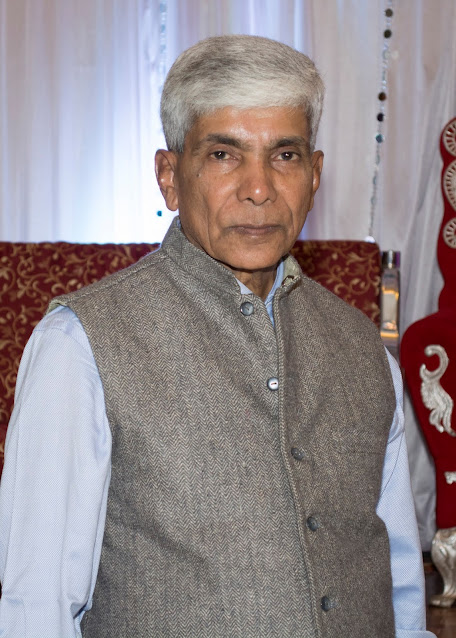
I think you must have guessed it already seeing my Baba's picture here. He has moved on in his soul's journey. He fell ill with an urinary tract infection in Jan and after a fall in Feb had to undergo spine surgery in Mar. His recovery looked promising inspite of the complications. However his body finally gave up. 

During this pandemic atleast I could convince him to stay with me. In the 6 months he was in bed we had several conversations, he was very happy that I was looking after him but he worried too much about how I would be alone after him. We talked about all things that we had skirted about before in our life. All answers were sought and given. Then on 18 June 2021 in the early morning as I went to say good morning to him, he just turned towards me and breathed his last. 

I informed my extended family and his relationships that he had fostered. He was cremated in the electric furnace as was his wish and no rituals. I offered a trimming of my hair with him. On the 13th day we had a shanti homa. Post which I was waiting until the lockdown opened up so I could do his Asthi visarjan. I did it in two places in the Arabian sea and at Gondavale in the Managanga river. He had wished to breath his last in Gondavale all his life however he had a plan B. So that is what I fulfilled. I am very sure he is in the lap of Shree Gondavalekar Maharaj.

The longest relationship in my life has come to an end. ๐Ÿ™Shree Ram Jai Ram Jai Jai Ram ๐Ÿ™

P. S: 

I had planned a SahastraChandra for him and we postponed it as he had a fall. Sharing here the video I had made for the celebration of his 80 years on Earth. He was an amazing father and a very sucessful man in life. 


Sunday, January 17, 2021

Preserve Preserve and Preserve.


We have such a wealth and we must value it. 

Everytime I watch a reaction on OSR for those who don't know, it is Our Stupid Reactions. It has been a two way process we learn so much about appreciation of art especially films and music from Rick and Korbin. However I love how it revives the interest of Indians in their own culture while the stupid babies teach them about our Indian heritage. The Benarasi saree video triggered yet again for me a need of immersion into our weaves.

I recollect going to Belur Chennakesava temple and chatting with the Pujari. He patiently told me the story of how Shantala Devi the queen of the Hoysala danced for her Vishnu here. He also told me, "Like you my son also works for an IT company. Visits us but does not live here." I had suggested to him that he must tell his son to make a video recording of him narrating the stories of the entire temple and the densely decorative sculptures adorning the temple. The pic here is of Indra on his Airavat, just one small sample of the rich sculpture in Belur.

Only if each family recorded their heritage like this. I feel a sense of loss when I think of our own Koli culture. We sold our fishing business when I was 13-14 yrs. It has taken me couple of decades to realize what a loss that is. The knowledge of the sea, the lunar phases, the weather is lost. My younger cousins don't even know what they have lost. My father and his bros lived their lives in the city and gave us a good life by working in good jobs. 

I think this value for heritage shows up in alternative generations. If you are like me do document what you can. Your generations to come will bless you.

I know my blogs both AnnaParaBrahma and Swachchanda are loved by many. I am hoping I continue to do it through my Youtube  channel TalkativeAnjali.

Sharing links here for those who need them.


Saturday, December 19, 2020

Heeng, Asafoetida


Spice no. 17 

Heeng! is a beloved spice in the Indian household. We don't grow the plants which are from the parsley family and leaves look similar to fennel leaves and Dill. I cannot imagine my life without asafoetida as children we grow up hating the sulphuric smell but learn to appreciate the benefits in our tadka. Eating Dal  everyday without heeng would have caused bloating. In the scenario of limited access to water and unclean habits prevalent across India asafetida was always kept aside in the kitchen as an antidote to indigestion. 

Strange that this clump like thing sold in tiny cubes or rocks are light to hand. This makes one wonder what it is? Well it is the sap that comes out of the the rhizomes and solidifies into brown lumps. A 4-5 year old tree of the Ferula asafeotida having a decent sized tap root is ideal, the rhizome are exposed and slashed to let the sap ooze out and form the resin lumps. The fresh resin smells very strongly sulphurous. This is exactly what is desired flavouring in our Indian food. The best quality comes from Iran and Afghanistan. Lahaul valley in Himachal is now being used for cultivation. One single plant gives only 500 gms of Heeng hence the cultivation and production makes it an expensive spice. Since Heeng is very strong in flavour and aroma it needs to be used with care and hence commercially it is sold as compound with wheat or rice in the form of powder. This compound also make asafoetida economical for home use.

While most spices came via the sea brought by the Merchant ships asafoetida is credit to be brought to Indian via land over the Hindu Kush mountains by the army of Alexandar. 

We have now reached the end of the Masala trail. We have gathered all the spices that are desired and now let us make Koli masala with these. Yes all these 17 spices are included in my community's masala including Agri and East Indian bottle Masala. Our masalas are similar with slight variation and preferences from family to family. 

After grinding the masala and filling the jars and bottles don't forget to drop a small lump of heeng. The Masala has to last a year on the shelf!

ShahJeera, Caraway Seeds


Spice no. 16 

ShahJeera by the name you might feel we have jeera then what is this Shahjeera why is it used in a blend that has jeera already? To add to the confusion the name causes they even look similar but they are not the same. Look close Jeera is lighter brown where as Shah jeera is darker in color. The seeds when held closer will reveal that Shahjeera is a delicate slightly curved seed. This gives it the biological name Carum curvi. Whereas Jeera is Cuminum cyminum.

Jeera or Cumin as we know imparts a very strong flavour and aroma for more subtle uses Shahjeera is prefered choice. Shahjeera is used in Mughlai dishes and Persian influenced cuisine in India. This Shahjeera is cultivated in Middle Eastern countries and Europe. Finland alone grows 25 % of the worlds Caraway seeds. These are used in Germany, France and Russia to flavour breads, casseroles and desserts too. 

In India however the use is limited to savouries and pickling. It is tastes similar to licorice and feels like a cross of cumin and fennel. It works as a carminative and hence important in folk medicine.

Shahjeera grows wild in the upper north region of India like Leh and Kashmir.

Friday, December 18, 2020

JASHN e DASTAAN e MUMBAI 18-20 Dec2020


The Mumbai Research Centre is pleased to announce that its three day festival Jashn e Dastaan e Mumbai starting TODAY will now be free for all citizens. We have received generous sponsorship and that has made it possible for us to remove the paywall.

We are thankful to our sponsors and ready to welcome all Mumbaikars to the festival of the stories of the city. Respective Zoom links for the three days are attached alongside. Voluntary contributions towars conservation and digitization of the library will be highly appreciated.

Lavang, Ruang, Krambu, Cloves


Spice no. 15 

Lavang in Marathi and sonically variant names in others states. In English Cloves, which traces the origin of the name to nail. It does look like one and it has fascinated the whole world with this shape and everyone fell short of creativity, so all names refer to the nail. Well if the shape was so fascinating so were the properties of this spice. Its ayurvedic properties as an anti-bacterial, anti-septic, anti-fungal and analgesic makes is much sought after across the world.

Cloves are synonymous as tooth ache reliever. Since ancient times mothers have told their children to hold a clove on to the tooth that is aching. Cloves have  a very high concentration of essential oil in it. While a whole clove is ok to be used. Clove oil if used directly can give a burn it is therefore always used diluted with other oils and the quantities used are tiny. Cloves in India and China have always been used as mouth freshner in royal courts. In India one of the components of paan is clove. It has many poetic references too in our literature. 

Yet again this spice is not native to India but comes from the island of Maluku. The sweet smell of this spice growing in the islands attracted seafaring traders. Yet again it was the Arabs and then the Europeans that were attracted to this region. The Dutch controlled this spice for long time just like they did the nutmeg. In a  sad turn of fate Maluku lost its top producer title to the Mozambique islands and now it is Mozambique that exports cloves to Indonesia for the manufacturing of clove flavored cigarettes that their population is addicted to. 

Clove tree is an evergreen tree and the spice that we see is the flower bud. Picking cloves is fascinating and high skilled. The flower buds goes through color changes from pale yellow, pink to bright red when ready to be plucked and only the red ones is the bunch have to be plucked for best quality. 

Cloves are considered heat causing spice and therefore a component of garam masala. The fragrance of the spice and its tenderizing property sees its use in meat preparations. I have also seen cloves used as an aromatic spice in desserts especially in the South. Bengal has a dedicated sweet to this spice the Labango latika, a type of khaja with the clove nailed into it!

Tamal patra, Tej Patta, Karuvaela, Birinji Ilai, Indian Bay leaf


Spice no. 14

Tamal Patra is a Sanskrit name of the fragrant leaf derived from the Cinnamomum species. In English is called Indian bay leaf and that causes confusion. Both are different species. Tamal Patra is reminiscent of Cinnamon and clove while Bay leaf which is botanically Laurus nobilis is pine like with bitter notes. This happened due to the colonizers rediscovering these spices and naming them as spices they knew from old records. 

Bay leaf is found in Sikkim and north east area and the Himalayan region of Nepal and parts Burma. However is is collected from wild trees than systematically grown trees. Hence the quality is random. 

Tamal patra is associated in a big way with garam masala and therefore meat. No wonder that it features so much in Mughal culinary whether it is the biryani, qorma or the pulaos. The Bengali, Mithila and North and North Eastern used these leaves since ever but the West of India was introduced to it only recently. 

Tej patta while it is popular as a spice it is extremely popular as a perfume. So a large percentage of the world's production of Tej patta is used for perfumery.

Yet again we know that Mumbai's strategic location as a port is what made spices available in this region.

Badian, Chakraphool, Anashuppu, Takkolam, Star Anise


Spice no. 13

Star anise is the prettiest of all spices. A favorite of the food-stylists. The spice is a dried fruit with 7-8 pronged shape. Each of those petal like shapes has a smooth seed. The whole fruit is used in flavouring alcohol like mulling wine. The flavour of star anise is similar to fennel and therefore used to substitute its flavour many times. 

Star anise acts as a tenderizer for meats hence used mostly in non vegetarian dishes. Star anise is rich in Shikimic acid and therefore 90% of it is used to extract it. This shikimic acid is the base ingredient for making the anti influenza drug Tamiflu.

This species of Illicium Verum is grown in North East Vietnam and South West China. It has a very limited cultivation in Arunachal pradesh. This spice is popular across the world and via spice trade has landed in use in Mumbai and Koli cuisine. Since it is used in powder form and never whole in curries it adds to the body of flavours.

Nagkesar, Cobra Saffron


Spice no. 12

Nagkesar or Cobra Saffron is a strange name but indispensable in Ayurveda due to its large range of use in ailments related to the gut such as vomiting, fever, migraines and even urinary tract infections. It is an important component of Chyavanprash. Strangely it is a very popular ornamental evergreen tree in Srilanka and is therefor also the national tree.

Nagkesar is ground along with other spices to get blends but never used singularly. The Nagkesar tree is commonly found across South East Asia and is used in local medicine beside the hard word is also sought after.

The taste of Nagkesar is like all spice. It is not to be confused with tailed pepper or Kabab chini which looks similar but varies in flavor.

Thursday, December 17, 2020

Masala Velchi, Badi Elaichi, Doda. Black Cardamom


Spice no. 11


My first introduction to Masala velchi was when my mother bought a packet of whole garam masala for making biryani. Biryani is not a Koli dish at all not even a fish Biryani but certainly it is from our Koli-Arab neighbor's repertoire who are known as Konkani muslims. I recollect due to this Velchi being so huge my mother always used a potli to tie the masalas. The resultant Biryani was mildly fragrant and it never got shunned. Masala Velchi has a truly notorious reputation of overpowering the flavours and unappealing physical appearance too. It is overpowering as it is very smoky due to the drying process that blackens and lends smokiness to the spice. It is dried in chambers of woodfire for long hours over days. This Badi elaichi is grown only in Sikkim in India. Sikkim however does never use it in its traditional cuisine. The spice is traded by Marwaris and so no wonder that Rajasthani cuisine uses it liberally and calls it lovingly Doda. This spice however has an association with meats and hence rarely will you find it used in Sattavik food. 

For the Sweets and Sattavik food it is the green Cardamom and even though they belong to the same Zingiber­aceae family the flavor profiles are different. Black cardamon tastes smoky and camphor like while green cardamom is sweet and minty cool. Green cardamom is  grown in Kerala in the hilly regions and is the predominant spice in their sweets. While the green cardamon grows in alternative alignment on the rhizomes Black cardamom is seen in red drupes. The taste of fresh plucked black cardamom is unlike its dried version whereas fresh green cardamom tastes similar.

Black Cardamom has a singular medicinal property, it used for digestive disorders in Ayurved and Chinese traditional medicine.

Tuesday, December 15, 2020

Mirchi, Mensinkai, Milagai, Mulaku, Lonka, Chili

Byadgi

Spice no. 10

India is synonymous with Chili, was it always like this? Was our food always this spicy? I think credit to a lot of articles in the media and television shows we have got to know that Chili came to India only less than 500 yrs ago.

So colonization and spice trade completely got India addicted to Chilies so much so replacing the Miri and Pippli. Our heat giving Black pepper and Long pepper. How incredible is this replacement. The Portuguese are credited to bringing chilies to Goa and the cultivation and propagation has been so rapid that today India grows 25 types of Mirchi. If that is impressive you would guess how this easy growing crop has covered the entire world and there exists 4000 varieties of chilies today. 

Chili heat is due to Capsaicin a chemical that send the signal of pain to the brain it therefore is different from Piperine in Black pepper. The measure of the strength of Capsaicin in Chili is measured by dilution in sugar solution and the unit of measure is Scovilles or Scoville Heat Units. The higher the dilution higher the strength. India's Naga chilies from the North boasts the honor of being one of the hottest chilies in the world. There are competitions held in the North East to celebrate Naga chilis or Bhut Jhalokia as it is known locally. Here the participants rub the chilies on their eyes! Talk of subjecting oneself to torture.

Chili though became popular Southwards from Goa it travelled to the North of India only 250 years after with the Maratha Empire. No wonder the Northern food is milder than Southern food when it comes to chilies.

Chili gives color, heat and has a lot of benefits for blood circulation and as much as it gives pain it counters pain in the body hence its use as an analgesic. Infact in rural communities applying chili powder on bruises is a common first aid. 

The famous Chilies however are from Guntur, Byadgi, Kashmiri. Andhra Pradesh produces 75% of India's chilies, so the reputation of the hottest food in the state.

Kolis use 2-3 types of chilies in their masala and here you see the Byadgi and Kashmiri.


Kashmiri

Monday, December 14, 2020

My Father and The Mexican farmer


Baba and Me in the sugarcane field in 2013 on the highway in Kolhapur

Baba is aging now. He has been the leader of our joint family. We were a small family of three. My mother and me made so many compromises well I did not have a choice but my mother did. Yet she chose to take care of the family. In a joint family everyone makes sacrifices big or small.

Dad always wanted everyone to study well. He would come back from work and teach us. He was working 3 jobs at his peak yet he made time to sit with us to study. There were 8 children in the family. What made him choose to do this? Parenting is such a thankless job. Only when you become parents you learn or do you?

The reason I put a pic of us in the field is because the Mexican corn farmer's story is playing on my mind. The story goes that this particular farmer grew the best corn. So several researchers were curious to know his secret. He divulged it after probing much and it was simple, sharing his seeds was his secret. Since corn requires cross pollination to give a good harvest and best quality it is a must that the pollen should be good. So for miles he shared his seed with other farmers whose seed wasn't of high quality. That ensured that his corn was the best. I see my Dad as that farmer. He shared his resources, effort and knowledge with everyone. Hoping that the pollination was good. When some one makes progress he is the happiest in the knowledge that now there is no dependency of the neighboring farmer for seed. They have their own seed. Flourish you all!

๐Ÿ™ Gratitude ๐Ÿ™

Sunday, December 13, 2020

Cassia and Cinnamon, Dalchini, Tuj, Karuvapatta


Spice no. 9

Let me start with Cassia because that is what we use in Indian cuisine. Dalchini which means a branch or twig from China. That is where the first uses of Cassia are seen. Cassia is used as a medicine for respiratory and circulatory and antibacterial effect. The flavour of the aldehydes in Cassia are sharp and pungent. This is the external bark of the Cinnamomum cassia. In the Indian cuisine meat and poultry dishes use Cassia. It is a garam spice so a component of garam masala. It helps make meat better for consumption as it is a blood thinner and lowers cholesterol. 

So since the Cassia belongs to genus Cinnamomum, it is confused with Cinnamon, the sweet spice that makes all baked goodies nice. However the use of sweet Cinnamon is mainly in the West. In India it is never used in sweets. This sweet Cinnamon is grown and harvested only in SriLanka. Those beautiful quills or sticks of Cinnamon perfectly cut into international standards of 4.2 inches long are painstakingly done by Cinnamon harvesters by hand. A horseshoe shaped blade is used to first scrape the hard exo bark and then get to the smooth layers of bark which is hand quilled and dried. Due to this process the Ceylon Cinnamon in much more expensive than the Cassia that Indians are used to. However for all commercial bakeries they use Cassia. Indonesia is also a producer of cassia cultivars.

So there now you know that Dalchini is not Cinnamon.

Saturday, December 12, 2020

Dhana, Coriander


Spice no. 8

What you see here in the picture looks like a seed that we call Dhana or Coriander. That however is a fruit and almost always mistaken to be the seed. I learnt this when I started growing Coriander in my Window box. The first time they did not sprout inspite of soaking them overnight. On research and talking to my agriculturist friend Nilesh Malekar I learnt that the seed is inside the hard ovoid fruit. So he told me to use a rolling pin to lightly crush the fruits and bare the seeds inside to aid germination. This makes us realize the effort in propogation of this plant that we love so much across India. 

Dhana is grown majorly in two states in India one is Rajasthan and the other MP. However Dhana is not a dessert crop. It needs a well hydrated soil but nevertheless is intense in this dessert land like no where. While Dhana is used widely in the Northern and Southern states it is agreed that everyone like a bite of  dhana in their bhajias and kababs but in curries we love the mellow woody fragrance from the powder. Fresh ground is always better. 

While the seeds are so popular nothing beats like hara dhaniya showered over everything in our Indian cuisine. Our sole pan Indian garnish! The leaves have that loving aroma but actually the aroma intensifies in the stem and roots. While in India we don't see much of the root being used. I was surprised to see it used in Thai cuisine. 

When I have tourists who come for my cooking sessions. Most declare they hate Coriander leaves even before they reach my home. They complain about the soapy taste blame it on their extra gene that is sensitive to aldehydes. However I trick them and show them how the cilantro that they desist when added in the tadka can flavor the dish so subtly. 

Our Indian cooking is truly alchemy. We use spices to give heat and then we use coriander to reduce that heat. Coriander soaked in water is a digestive. In pickles dhana is the one that balances heat and also acts as preservative. The Egyptians knew this in 1500 BCE but then this is one spice which finds presence is Greek history records as old as 7000 BCE. Coriander seeds are found across the world and it doe give a feeling that this grew really wild.

My favorite uses of Coriander are rough crushed that lends beautiful aroma to the dish while the powder gives body to curries and sambar. Cilantro is Spanish word but the Portuguese are the bigger user of it after India.

The most unique usage of Dhana is its dal as a mouth freshner and we must thank Gujarat for processing it and making it popular.

Friday, December 11, 2020

Jaiphal-Javitri, Nutmeg-Mace


Spice no. 7

Jaiphal-Javitri, Nutmeg-Mace these are the twin spices obtained from the same tree. The story of Nutmeg and Mace is fascinating. It was available wild only in Banda Islands for centuries. The fragrance of which first attracted seafaring traders. First Indian and then Arabs and finally the Europeans. The Dutch controlled it for a long time. When there is control then there is unnatural prevention methods of propagation but nature rebels and birds carried the seeds of the nutmeg to other islands. India was among the early cultivators. Since it came via Javanese traders it got the name Javitri for mace.

The Nutmeg that we know is the seed. The mace is that network like aril covering the seed. Good quality nutmeg when cracked is red and on drying the color fades to a light orange if its yellow it has lost most of its volatile oils. The nutmeg seed is similar to a bettlenut with light and dark network of veins. The darker veins are the ones laden with essential oil. Commonly nutmeg is used by grating the seed and using the powder to flavor meat and fish. Kolis don't use nutmeg in their masala but use mace. Yes we are smart as mace is milder and cheaper yet has the same properties. Mild usage is key in the case of nutmeg and mace as it is a heat producing or garam spice. Hence you will find it prefered to be spinkled over shrikhand. So it does not cause mucous in the body. The Europeans use it in their soups and sweets too. Excessive use of Nutmeg and mace has psychotropic effect. Maharashtriya people enjoy their milky coffee with a sprinkle of jaiphal. Wonder if it perks up or causes a daze.

Connecticut has the moniker of the nutmeg state since there was rampant creation of fake nutmeg from wood which became a popular term for fraudsters to be called the wooden nutmeg.

The semi hard pulpy fruit of the nutmeg is used to make jam however that is a recent development.

Grenada is another place where nutmeg and mace is grown on large scale and gets a place of pride on their flag.

Thursday, December 10, 2020

Badishep, Saunf, Sombu, Variyali, Panmohuri, Fennel


Spice no. 6

Badishep or Saunf is a fragrant spice. We love to eat it as a mouth freshener. Commonly confused to be a seed when it is actually a fruit. Fronds of Fennel are sold in the market and near schools. I am sure many of us have memories of chomping on them while in school.

Fennel as a spice is used for its aroma, flavour and ayurvedic properties. India is the largest producer of fennel and also a big user. It is used both in savory and sweet preparations. Kashmiri Pandit cooking stands out for its indispensable use of fennel. In Koli cuisine we use fennel in our meat dishes a little more than fish recipes. Kolis believe that fennel makes a dish aromatic but it does not preserve that well. The volatile phenols are what give it flavors like licorice, mint, etc. In Ayurved Fennel is considered cooling on the body. Its use as a breath freshner is not just cosmetic, it also works as a carminative and purgative. Hence fennel is chewed on after a meal. It is added in paan as one of the many ingredients. Fennel is used in pickles however this must be purely as an aromatic and antidote for chili used as there is no mention of it as a preservative. A tissane is made to treat the gut and we know its use in gripe water for colic in babies.

Fresh fennel fruits are a delight but even its spiky looking green leaves are used in parts that grow it. Fennel bulbs are use in European countries as a crunchy vegetable. 

It is grown in Southern Europe and Asia. India grows 60% of the worlds fennel.

Next time you eat a Malpua find the fennel in it and feel proud of India.

Tuesday, December 08, 2020

Blessed With A Brother

This meal was cooked for Vijay Bhau and Mangala Vahini in gratitude for all that they do for me.

I don't think I have mentioned this here before I am blessed with a brother not of blood but love that has grown over 45 years. Vijay bhau came to our home when I was a toddler. He was my family friend's son and he was brought to Mumbai to continue his studies after his Std. X.

As a kid I was very mischievous so he was my punching bag. He was my protector outside the home and also who made me tough unbeknownst. I played with his group of friends, I learnt never to take it lying. He used to come to school to pick me up and I wouldn't budge until he bought me an icecream from Yankee Doodles. 

My Aai loved him a lot and so did he, he called her Kaki. He was the obedient son and I the difficult one. He helped my mother in every chore. My mother taught him everything from making chapati to cleaning the home to shopping for vegetables and even haggling with the bhaajiwalas. She always gave his example to me that he was so good at all the chores while I refused to learn these things as a kid.


His life has been challenging but he did not break. He went through everything like a warrior. His wife and our Mangala Vahini has supported him quietly and like a strong pillar. He has taken care of his blood family consisting of 2 brothers and 2 sisters. Educating his younger brother and getting his sister married. One of his sister was a heart patient who he took care of till she was alive. He has made sacrifices for the other brother that he should be indebted to all his life. However life always throws a googly people for whom you sacrifice the most are the most ungrateful ones.

He suffered ill health few years ago and I feared if that would have a long lasting impact on his life. I am glad that he is back to his energetic self again. Last week he and Mangala Vahini spent time with me, it definitely made me happy. Both Vijay bhau and Mangala Vahini are my rocks. They are the ones who rush to be my side and I don't even need to call out to them. I count my blessing and pray to God may this bond grow ever sweeter ๐Ÿ™

Friday, November 27, 2020

Miri, Pepper, Kali Mirch, Milagu, Kurumulagu


Spice no. 5

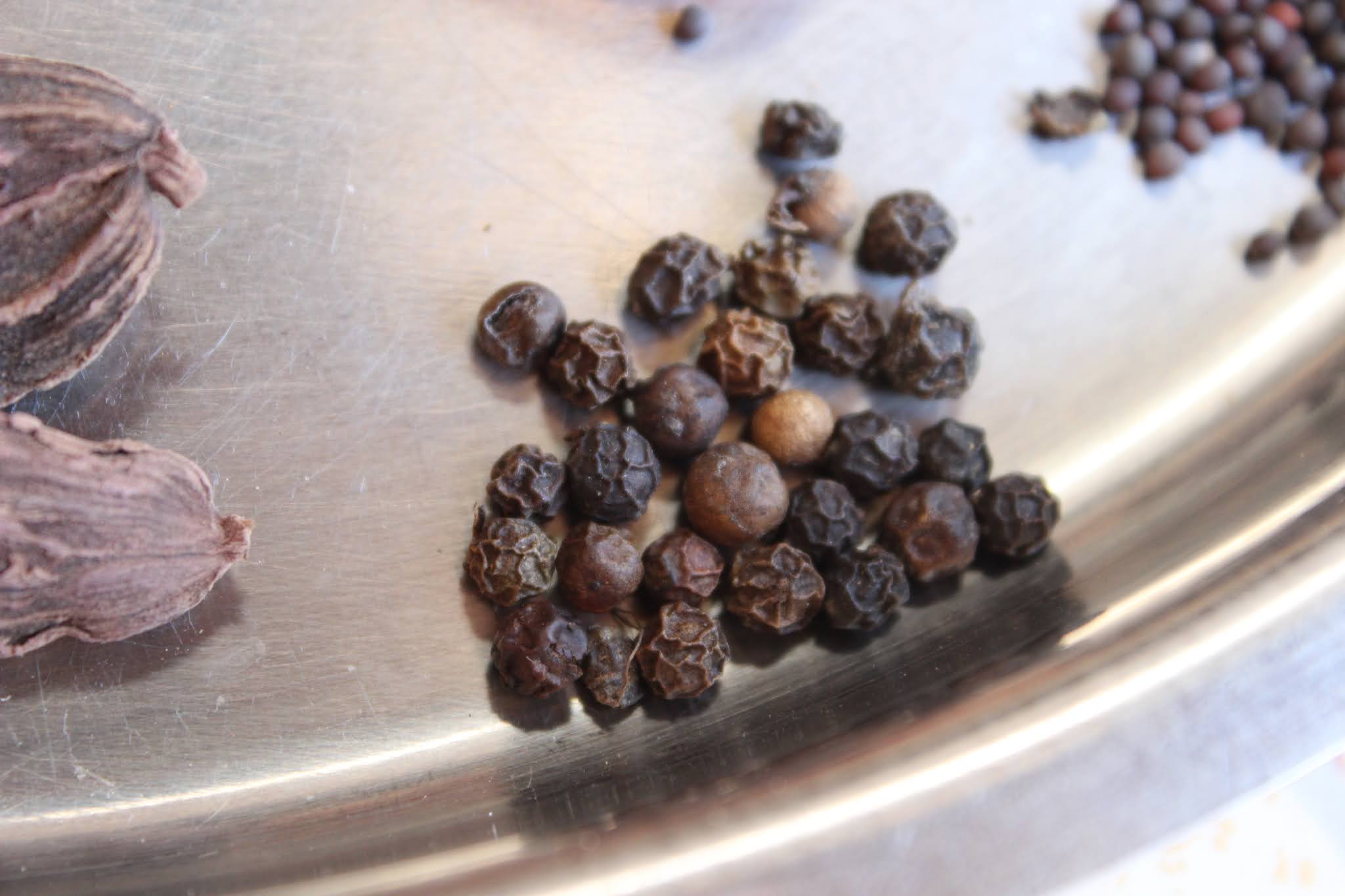
The round shriveled skin globular fruit of Piper nigrum. That is what we know in the form of black pepper. Pepper climbers are a common sight in Kerala and Karnataka. Native to Bharat. Find mention in history since 2000 BCE. The lost ancient port city of Muziris in Kerala was known for trade of kala sona.

Pepper is indispensable in our masalas especially the garam masala. It gives heat and Ayurved employs it exactly for it. In all ailments caused by cold the antidote is pepper. It is a spice used in Indian cooking and trading made it a fashionable seasoning world wide so much so the display of pepper on a well kept dinning table is a must today. Pepper was traded like gold in the past. The earliest application of pepper is preservation and so pepper was found as an essential ingredient for Mummification. Ramesses II nose was found stuffed with pepper. I would have wondered if that was death by pepper if not for the preservative properties.

Pepper vines a co-crop with coffee in Coorg

Pepper is classified into 3 types, black pepper which is ripe pepper that is dried either after boiling or without. The Green pepper is not cooked but directly dried and it is plucked at raw stage before it turns green. White pepper is the seed of pepper fruit. Since this is processed to discard the pericarp and retain only the seed it is milder in taste.


Fresh green pepper is pickled in brine. To be enjoyed as a condiment in a Thali meal. Black pepper received place of pride in Pepper Rasam, pepper idli, pepper chicken in Kerala and pepper laced sev and Khari puris. Pepper caught the fascination of the Romans and trade with India flourished. Pepper became currency and was even demanded as ransom by Alaric, king of the Visigoths. He included 3,000 pounds of pepper as part of the ransom he demanded from Rome when he besieged the city in fifth century.

Pepper has been consumed internally as well as an application on the skin to heal inflammations of skin, joints and even to reduce stomach aches. Internally for cold, cough, constipation, blood circulation and toothache etc.

Pepper being expensive is adulterated with papaya seeds as they look similar. Good pepper will give a bite well pressed under the teeth. So watch what you are buying.

Once upon a time Kerala solely was the largest exporter of pepper in the world however Vietnam captured the position by increasing production of white pepper which is much more in the demand in the world.

Friday, November 20, 2020

Rai, Mohri, Sarson, Sorshe, Sasave, Mustard


Spice no. 4

Mustard we know it as the tiny seeds in the phodni or tadka without which our food is incomplete. It is loved right across India, In the South that extra tadka is the highlight of chutneys and everything else. Bengal and North East's most beloved spice. They cannot function without it, the shorshe bata is a must in fish preparation and the oil has to be Mustard. I  myself being Maharshtriya love my groundnut oil and my palate required a lot of maturing before I learn to appreciate mustard oil. That too thru Kashmiri cooking. I learnt that smoking the oil reduced its punjency and brought out the flavours beautifully when I learnt to make Taher from Anita Tikoo. Then a conversation I recollect with the food writer Marryam Reshi who is married to a Kashmiri that for all their love for Mustard oil but they had very little to no love for the mustard seeds. She even goes to say in her book, The Flavour of Spice that Kashmiris don't use even a spoonful of Mustard in the whole year!

I was in Hampi when I heard the guide tell about the King's Ganesh called Kadle kalu Ganesha and the common man's Ganesh called sasave kalu Ganesha. Such a vivid comparison. Mustard has always been the representation of tiny. Tiny but powerful. Gujaratis befriended it. They use so much besan in cooking as thickner and as a major ingredient for the farsan that Ayurvedic balance is a must with a tadka of rai. Rai is potent gas shooter. It makes everything easy to digest. 

While in Bangalore I met families from the Vidarbh of Maharashtra that made koshimbir with pounded mustard in dahi. A Mumbaikar rarely gets an insight into remote regional Maharashtriya cuisine. So this came as a surprise. Then another of my favorite use of Mustard is in the Sasam from the coasts of Goa and Karnataka. A paste of mustard, coconut and red chilies is mixed with fresh sweet n sour cut fruits like mango, pinapple and grapes and eaten as a palate changer. The same or similar paste is cooked with raw mango to make a curry called sasav. That is true dedication to a spice, when the dish itself is called by its local name.

You can tell a guy is from the North Indian state when his deo is overpowered by the smell of sarson Ka tel. Jokes apart mustard oil is considered a garami wala oil and best for massage in winter. Alleviates aches n pains. 

I stock many different oils in my pantry and one day my friends came to stay over unplanned and my Friends husband was thrilled to have a masoor dal, rice and aloo shedho with a dash of mustard oil on it just out of the blue cooked by me. I need not say he is a bengali. Yes and it surprised me that they had a tradition of eating raw oil too like Maharashtriya enjoy their peanut oil on certain dishes like ukad and chutneys but that is for another story.

Among Kolis we don't use Rai in tadka but it is part of our masala. My favourite is a Khamanga green chili, hing - Mohri Phodni chi sukki batata bhaaji. I could eat it as a snack. You learnt a new word for mustard here.

In Maharshtra we also use Mustard paste to apply on the belly button of a baby with colic as you cannot feed the mustard to the baby and it works like magic. Talking about magic, mustard seeds along with salt and alum or phatkiri is held in the palm of the hand and waved across a person who has travelled or has had an exposure to evil eye and dropped in the hot embers of the chulha. It removes the evil eye is the belief. However its is nothing but aroma therapy at work. The mustard releases the pungent oil and lifts the mood. That's what makes babies smell good after this Olavni of mustard seeds and salt and phatkiri.

While many times we have learnt that a certain spice travelled from across the world and came to India Mustard is home grown and it is native plant across the world so one less dispute for the World. So there is English Mustard, Dijon and far Mexico too. I wonder if our Sarso da saag loving Punjabis were attracted to Canada because it is the largest producer of Mustard or did the Punjabis make it the largest producer of Mustard?

Monday, November 16, 2020

Diwali 2020 in the midst of Covid-19


Back to this gorgeous view that I am blessed with. 

We had a fantabulous Diwali, a staycation at Powai Lake. The videos will come up on TalkativeAnjali soon.

This morning breakfast was homemade Diwali faral brought over by Mangala Vahini, Vijay bhau, Sujal and my DIL Dipti. I did not make any faral. So this was enjoyed even more. 

A generous box filled with her usual repertoire and some new additions. I also noticed the change in taste so I am thinking it is Dipti's hand work. Loved the Phodni in the Chivda, Masta Khamanga. The Karanji was delicate and filled well. My Karanji cover is always a thick one so love Vahini's. The Khari puri is a new addition and so is the barik shev. Her besan ladoo are always beautifully roasted brown. The jaad shev her usual. I noted the shankarpali had a whiff of vanilla essence. Who dun it? Vijay bhau always helps with faral making never seen Sujal do it. He must have done the shopping for the ingredients I guess. Enjoyed everything a lot! 


Thank you for coming over and bringing along Ankita and Akshada. 

Dinner started with 3 types of icecreams as soon as they arrived. Orange Apricot, Pineapple cranberry and Pink Guava with salt n chili sprinkle. I was still rolling out Ghadichi Poli then. 

Rest of the menu went like this Ghadichi Poli with matar paneer because Sujal loves it, basmati rice with Masoor aamti made in coconut milk. Bengali tomato chutney I had saved for them to taste and take away too. Akhrod halwa that we got from the hotel as a send off since we had loved it. A jugful of mattha to close the meal.

After coming back home from the staycation I quickly Swiggyed to replenish my pantry and fridge. Cooked the dinner just in time of their arrival. My dinners are always help yourselves ones.

Though a brief evening it did feel like a Diwali dinner because when together we are loud n cheery ๐Ÿ˜

Monday, November 09, 2020

Cooking and Feeding With LOVE


It is such a joy to cook and feed. Right from when I turned adult I have been doing it. If anyone cooks for me a decent meal I consider it an act of true love. There are hundreds of eateries from where one can order and these days we have a good spending capacity. However that is not the same kind of love as when some one gets into the kitchen to cook up a meal for you. The taste may not be good but what is important is you took the trouble.

When I was in college many times I would be famished in the evenings when I would be back home. So I would make snacks for myself and in a joint family one never ate alone so I made more for anyone who would like it. There was one cousin who did not care for anyone and always had a twisted point of view so she said I cooked because I wanted to eat! 

Many decades later I reflect on it. Words don't hurt so much anymore. If I did not like cooking and feeding this blog would not have existed. All that I do in the field of food wouldn't have brought me to where I am.

The Community food fridge has provided me an opportunity to cook and feed people anonymously. I try to use the best quality ingredients and make it tasty so when some one eats it they should feel satiated. After all Shree Gondavalekar Maharaj has said that it is the only desire that can be fulfilled as once your stomach is full you don't desire more. What follows is Trupti.

Sunday, November 08, 2020

Jeera, Jฤซrige. Jฤซlakarra, Cumin


Spice no. 3

Jeera was once upon a time a prized spice. You guessed it right as it wasn't grown widely in Bharat. It was grown mainly in Egypt and the Middle East.

It belongs to the Parsley family and the leaves look like Shepu bhaaji. The Jeera or Cumin we know has a strong warming flavour. If not used carefully it overpowers all other flavours in a dish. It is one of those spices that get a special place because of this bossy flavour in dishes dedicated to showcase it. Like the Jeera rice, Jal Jeera, Jeera aloo etc. Interestingly Jeera is not predominantly native and was very expensive in the past centuries as it was traded in India by the Arabs. Yet jeera was used in fasting recipes. Fasting recipes as you know uses foods n spices which are not eaten everyday. This is to be able to get a shot of new nutrients and a break from the usual grains. Hence began the use of jeera in the fasting recipes. It was a show of luxury too. The fasting recipes did not allow use of mustard seeds which were used everyday and that gap was happily filled by cumin. Plus a little of it made the dish fragrant and warm. 

Believe it or not cumin was used as a preservative not just for food but also dead bodies in Egypt. It was one of the important spices used in the mummification process. This spice later travelled to different continents and finds big use in Latin America. The Orient uses cumin in a lot of its dishes and medicines too. India and China grow 70% of world's cumin and use 90% of it. 

In India cumin finds big use in home remedies for the gut. There is a whole range of jal jeera, Kashyam and rasam where Jeera in the hero. It has been incorporated into the tadka and has become common place. Jeera is one of the 5 spices in panch phodon too.

How can we forget our bhuna jeera that is sprinkled on chaats. However that is a traditional thing to do in the Middle East, it is placed on the table just like salt and pepper for all to help themselves to.

Saturday, November 07, 2020

Mint Lounge: A savoury note to a sweet Diwali


My quote in today's newspaper and @livemintlounge where I talk about the balance of sweet n savory in our Maharashtriya Diwali Faral. 

Thanks @poojabd @prestaurants_ for reaching out to me. Thanks @avantikabhuyan for quoting me.

Read it here.

Monday, November 02, 2020

Halad, Haldi, Haldar, Manjal, Haridra, Turmeric


Spice No.2

Haridra in Sanskrit more commonly Halad, Haldi, Haldar, Manjal. Native to Bharat and most species of Turmeric exsist in the sub-continent. It is a rhizome and not a root which is used fresh or dried and powdered. Turmeric has always been the most accessible spice to everyone in Bharat. It was grown in the backyard of every home through ages. While it was used as spice in food it had great importance in Ayurved too. A lep of turmeric and phatkiri (alum) is the most effective for bruises and cuts. Turmeric being antibacterial worked well to preserve food, heal the gut and any inflammation, whether internal or external. Besides it made the food appealing with the bright yellow color. The fresh turmeric is sliced and made into a seasonal pickle with a squeeze of lime n salt and some green chilies for heat. If you are from the Kokan you are familiar with turmeric leaves used in en-papillote fashion to steam rice and jaggery sweets and fish too. This common usage gave it important place in worship and lifecycle celebrations. 


We know the beauty routines of Haldi chandan uttan or packs of Turmeric and sandalwood which were of daily use. It is well in practice that a Hindu is given haldi treatment twice in a lifetime at the time of wedding and on death. In worship Haridra - Kumkumam (which is made from turmeric) were indispensable. Many are aware about Holi as the festival of color. In Maharashtra we have other festivals of color called Champa Shashti when Khandoba is worshipped and Turmeric is showered by devotees. The turmeric represents gold. It is also showered as a healing medicine on Khandoba as a celebration of his victory after killing the demons Mani-Malla. Another is Somvati Amavasya when devotees celebrate the wedding ritual of Khandoba with Mhalsa by showering turmeric.


The US Patent and Trademark Office had granted a patent to two persons of Indian origin. However CSIR fought the legal battle to revoke it. The usage of turmeric in our food and its application in wound healing has been used through centuries and it is native to India so it lacked the novelty factor for patenting. This was a big victory for India.

There is documented evidence that the first curry had fresh Turmeric in it. We know of the trends that swept the western world with sudden wave of Turmeric latte which is our ubiquitous Haldi doodh that grandmother's gave us when our throats were itchy with cough n cold. Amul has canned it for the young generation to make it Kool. One brand even has an turmeric icecream!

You are on a #MasalaTrail with Anjali Koli. See you in the next post.

Friday, October 30, 2020

Tirphal


Spice No.1 

Starting this Masala trail with my favorite spice Mullilam, Tilfda, Kamte Kai, Jummina Kayi, Teppal, Tippal, Kaatmurikku, Chirphal, Tirphal. Many names in this multilinguistic Bharat. Mind you Tirphal is not your Triphala, while one is a coveted spice the other is a laxative. 

It gets its name from the tri-lobed pericarp or outer part of the berry. Some of you guessed correctly it does look like Sichuan pepper not only that it looks like the Japanese or Korean pepper too. That is because they are the same genus Zanthoxylum botanically. However Tirphal is distinctive species rhetsa.

In the west coast we discovered that seafood paired with this pretty native spice like long lasting lovers. The spice tingles the tongue as it hits it, causing numbing and works magic with protein and fat from seafood. While the Kokani people use it whole in their preparations Kolis use it in their dry ground masala as one of the main ingredients. You will be surprised to know that the local anesthetic Sanshool is derived from this spice. 

How to distinguish Tirphal from Sichuan pepper? Tirphal is brown or black larger in size compared to Sichuan which is reddish and smaller.

I am sure you are already bowing to our ancestors for their knowledge of ayurved, food and the application of it in our lives. How deep is our heritage. Keep following!

Thursday, October 29, 2020

Masala Trail


เคœेเคฃू เค•ाเคฎ เคคेเคš เค•เคฐे! One who has skill only that person is right to do it. I believe in this almost religiously. Masala making is an art equivalent to perfumery. I can very well bring down cost by making it locally. However I don't do it. I have several teams that specialise in their community specific masala and I get them made in those geographies by the experts of years. 

There are several facets to Masala making
1. Quality of spices 
2. Cleaning 
3. Treatment 
4. Proportions 
5. Method of grinding 
6. Sieving 
7. Preservation 


Recipe of masalas vary as per the taste of the family, it is a lot to do with class and financial status understandbly. Spices are expensive after all. A family of lower status uses more chili as a little goes a long way. A better off family uses more aromatics. So even if you find many versions of my masalas in the Market know they are not the same. 

In Koli we say เคจाเค–เคตा เคšे เค˜เคฐเคšं เค–เคชเคจाเคฐเคฃीเคšे เค˜เคฐเคš्เคฏाเคฒा เค•เคธं เคเค•ेเคฒ? To translate. How can there be competition between what is from a Nakhwa's home and his labourer's home?

Disparity is real in life. Sorry I had to use this example to explain quality. 

P. S. May be the labourer saying, Nakhwa's food doesn't have the heat does justice. ๐Ÿ˜‚๐Ÿ˜‚

Tuesday, October 27, 2020

Community Food Fridge at DP's Restaurant Opp. Ruia College

Mark this location of Community Food Fridge at DP's restaurant opp. Ruia College, Dadar.


Now that you know do fill it up with food, leftovers from parties and celebration is also good. This feeds anyone who is hungry. There are many who have lost jobs and on the streets. This fridge gives them dignity by allowing them to take as much as they need. I had gone to see it since I knew it is a new installation. Saw it empty so kept few small bottles of Maaza and Minute maid the first day. I cooked Tomato rice and sheera on Vijayadashmi and kept in the fridge. On the way handed out to a couple of people as the food was still warm. It's a joy to see happy faces enjoy your cooking!

Please spread the word far and wide.


On Trail