Monday, November 16, 2020

Diwali 2020 in the midst of Covid-19


Back to this gorgeous view that I am blessed with. 

We had a fantabulous Diwali, a staycation at Powai Lake. The videos will come up on TalkativeAnjali soon.

This morning breakfast was homemade Diwali faral brought over by Mangala Vahini, Vijay bhau, Sujal and my DIL Dipti. I did not make any faral. So this was enjoyed even more. 

A generous box filled with her usual repertoire and some new additions. I also noticed the change in taste so I am thinking it is Dipti's hand work. Loved the Phodni in the Chivda, Masta Khamanga. The Karanji was delicate and filled well. My Karanji cover is always a thick one so love Vahini's. The Khari puri is a new addition and so is the barik shev. Her besan ladoo are always beautifully roasted brown. The jaad shev her usual. I noted the shankarpali had a whiff of vanilla essence. Who dun it? Vijay bhau always helps with faral making never seen Sujal do it. He must have done the shopping for the ingredients I guess. Enjoyed everything a lot! 


Thank you for coming over and bringing along Ankita and Akshada. 

Dinner started with 3 types of icecreams as soon as they arrived. Orange Apricot, Pineapple cranberry and Pink Guava with salt n chili sprinkle. I was still rolling out Ghadichi Poli then. 

Rest of the menu went like this Ghadichi Poli with matar paneer because Sujal loves it, basmati rice with Masoor aamti made in coconut milk. Bengali tomato chutney I had saved for them to taste and take away too. Akhrod halwa that we got from the hotel as a send off since we had loved it. A jugful of mattha to close the meal.

After coming back home from the staycation I quickly Swiggyed to replenish my pantry and fridge. Cooked the dinner just in time of their arrival. My dinners are always help yourselves ones.

Though a brief evening it did feel like a Diwali dinner because when together we are loud n cheery 😁

Monday, November 09, 2020

Cooking and Feeding With LOVE


It is such a joy to cook and feed. Right from when I turned adult I have been doing it. If anyone cooks for me a decent meal I consider it an act of true love. There are hundreds of eateries from where one can order and these days we have a good spending capacity. However that is not the same kind of love as when some one gets into the kitchen to cook up a meal for you. The taste may not be good but what is important is you took the trouble.

When I was in college many times I would be famished in the evenings when I would be back home. So I would make snacks for myself and in a joint family one never ate alone so I made more for anyone who would like it. There was one cousin who did not care for anyone and always had a twisted point of view so she said I cooked because I wanted to eat! 

Many decades later I reflect on it. Words don't hurt so much anymore. If I did not like cooking and feeding this blog would not have existed. All that I do in the field of food wouldn't have brought me to where I am.

The Community food fridge has provided me an opportunity to cook and feed people anonymously. I try to use the best quality ingredients and make it tasty so when some one eats it they should feel satiated. After all Shree Gondavalekar Maharaj has said that it is the only desire that can be fulfilled as once your stomach is full you don't desire more. What follows is Trupti.

Sunday, November 08, 2020

Jeera, Jīrige. Jīlakarra, Cumin


Spice no. 3

Jeera was once upon a time a prized spice. You guessed it right as it wasn't grown widely in Bharat. It was grown mainly in Egypt and the Middle East.

It belongs to the Parsley family and the leaves look like Shepu bhaaji. The Jeera or Cumin we know has a strong warming flavour. If not used carefully it overpowers all other flavours in a dish. It is one of those spices that get a special place because of this bossy flavour in dishes dedicated to showcase it. Like the Jeera rice, Jal Jeera, Jeera aloo etc. Interestingly Jeera is not predominantly native and was very expensive in the past centuries as it was traded in India by the Arabs. Yet jeera was used in fasting recipes. Fasting recipes as you know uses foods n spices which are not eaten everyday. This is to be able to get a shot of new nutrients and a break from the usual grains. Hence began the use of jeera in the fasting recipes. It was a show of luxury too. The fasting recipes did not allow use of mustard seeds which were used everyday and that gap was happily filled by cumin. Plus a little of it made the dish fragrant and warm. 

Believe it or not cumin was used as a preservative not just for food but also dead bodies in Egypt. It was one of the important spices used in the mummification process. This spice later travelled to different continents and finds big use in Latin America. The Orient uses cumin in a lot of its dishes and medicines too. India and China grow 70% of world's cumin and use 90% of it. 

In India cumin finds big use in home remedies for the gut. There is a whole range of jal jeera, Kashyam and rasam where Jeera in the hero. It has been incorporated into the tadka and has become common place. Jeera is one of the 5 spices in panch phodon too.

How can we forget our bhuna jeera that is sprinkled on chaats. However that is a traditional thing to do in the Middle East, it is placed on the table just like salt and pepper for all to help themselves to.

Saturday, November 07, 2020

Mint Lounge: A savoury note to a sweet Diwali


My quote in today's newspaper and @livemintlounge where I talk about the balance of sweet n savory in our Maharashtriya Diwali Faral. 

Thanks @poojabd @prestaurants_ for reaching out to me. Thanks @avantikabhuyan for quoting me.

Read it here.

Monday, November 02, 2020

Halad, Haldi, Haldar, Manjal, Haridra, Turmeric


Spice No.2

Haridra in Sanskrit more commonly Halad, Haldi, Haldar, Manjal. Native to Bharat and most species of Turmeric exsist in the sub-continent. It is a rhizome and not a root which is used fresh or dried and powdered. Turmeric has always been the most accessible spice to everyone in Bharat. It was grown in the backyard of every home through ages. While it was used as spice in food it had great importance in Ayurved too. A lep of turmeric and phatkiri (alum) is the most effective for bruises and cuts. Turmeric being antibacterial worked well to preserve food, heal the gut and any inflammation, whether internal or external. Besides it made the food appealing with the bright yellow color. The fresh turmeric is sliced and made into a seasonal pickle with a squeeze of lime n salt and some green chilies for heat. If you are from the Kokan you are familiar with turmeric leaves used in en-papillote fashion to steam rice and jaggery sweets and fish too. This common usage gave it important place in worship and lifecycle celebrations. 


We know the beauty routines of Haldi chandan uttan or packs of Turmeric and sandalwood which were of daily use. It is well in practice that a Hindu is given haldi treatment twice in a lifetime at the time of wedding and on death. In worship Haridra - Kumkumam (which is made from turmeric) were indispensable. Many are aware about Holi as the festival of color. In Maharashtra we have other festivals of color called Champa Shashti when Khandoba is worshipped and Turmeric is showered by devotees. The turmeric represents gold. It is also showered as a healing medicine on Khandoba as a celebration of his victory after killing the demons Mani-Malla. Another is Somvati Amavasya when devotees celebrate the wedding ritual of Khandoba with Mhalsa by showering turmeric.


The US Patent and Trademark Office had granted a patent to two persons of Indian origin. However CSIR fought the legal battle to revoke it. The usage of turmeric in our food and its application in wound healing has been used through centuries and it is native to India so it lacked the novelty factor for patenting. This was a big victory for India.

There is documented evidence that the first curry had fresh Turmeric in it. We know of the trends that swept the western world with sudden wave of Turmeric latte which is our ubiquitous Haldi doodh that grandmother's gave us when our throats were itchy with cough n cold. Amul has canned it for the young generation to make it Kool. One brand even has an turmeric icecream!

You are on a #MasalaTrail with Anjali Koli. See you in the next post.

Friday, October 30, 2020

Tirphal


Spice No.1 

Starting this Masala trail with my favorite spice Mullilam, Tilfda, Kamte Kai, Jummina Kayi, Teppal, Tippal, Kaatmurikku, Chirphal, Tirphal. Many names in this multilinguistic Bharat. Mind you Tirphal is not your Triphala, while one is a coveted spice the other is a laxative. 

It gets its name from the tri-lobed pericarp or outer part of the berry. Some of you guessed correctly it does look like Sichuan pepper not only that it looks like the Japanese or Korean pepper too. That is because they are the same genus Zanthoxylum botanically. However Tirphal is distinctive species rhetsa.

In the west coast we discovered that seafood paired with this pretty native spice like long lasting lovers. The spice tingles the tongue as it hits it, causing numbing and works magic with protein and fat from seafood. While the Kokani people use it whole in their preparations Kolis use it in their dry ground masala as one of the main ingredients. You will be surprised to know that the local anesthetic Sanshool is derived from this spice. 

How to distinguish Tirphal from Sichuan pepper? Tirphal is brown or black larger in size compared to Sichuan which is reddish and smaller.

I am sure you are already bowing to our ancestors for their knowledge of ayurved, food and the application of it in our lives. How deep is our heritage. Keep following!

Thursday, October 29, 2020

Masala Trail


जेणू काम तेच करे! One who has skill only that person is right to do it. I believe in this almost religiously. Masala making is an art equivalent to perfumery. I can very well bring down cost by making it locally. However I don't do it. I have several teams that specialise in their community specific masala and I get them made in those geographies by the experts of years. 

There are several facets to Masala making
1. Quality of spices 
2. Cleaning 
3. Treatment 
4. Proportions 
5. Method of grinding 
6. Sieving 
7. Preservation 


Recipe of masalas vary as per the taste of the family, it is a lot to do with class and financial status understandbly. Spices are expensive after all. A family of lower status uses more chili as a little goes a long way. A better off family uses more aromatics. So even if you find many versions of my masalas in the Market know they are not the same. 

In Koli we say नाखवा चे घरचं खपनारणीचे घरच्याला कसं ऐकेल? To translate. How can there be competition between what is from a Nakhwa's home and his labourer's home?

Disparity is real in life. Sorry I had to use this example to explain quality. 

P. S. May be the labourer saying, Nakhwa's food doesn't have the heat does justice. 😂😂

Tuesday, October 27, 2020

Community Food Fridge at DP's Restaurant Opp. Ruia College

Mark this location of Community Food Fridge at DP's restaurant opp. Ruia College, Dadar.


Now that you know do fill it up with food, leftovers from parties and celebration is also good. This feeds anyone who is hungry. There are many who have lost jobs and on the streets. This fridge gives them dignity by allowing them to take as much as they need. I had gone to see it since I knew it is a new installation. Saw it empty so kept few small bottles of Maaza and Minute maid the first day. I cooked Tomato rice and sheera on Vijayadashmi and kept in the fridge. On the way handed out to a couple of people as the food was still warm. It's a joy to see happy faces enjoy your cooking!

Please spread the word far and wide.


Tuesday, October 20, 2020

Bangali Tomato Chaatni


Ever since I discovered Bong Eats website and Youtube channel I have been smitten. Love watching them cook and listening to the earthy music. There are only a few things that I can make from their channel though as I am vegetarian. So I made their Bengali Tomato Chutney and Khichuri with papor to go along.

I adjusted the recipe to my pantry while I kept the essence intact. I used dried figs to replace dates as that is what I had on hand and used coarse red chili powder instead of whole red chili since I did not have any. Yet another change is I used lime juice instead of citric acid, natural is always better. It gives nice thickening and tartness required in this chutney. I skipped cashews because we use cashews so commonly in everything I am tired of them and don't like them in my chutney. So actually this Chaatni as the Bangali call it is now my own recipe. So here are the ingredients.

INGREDIENTS
500 g tomatoes
40 g pitted dates 
(I used dried figs)
80 g aam shotto (mango pulp candy) / aam papad 
40 g raisins
400 g sugar 
(Reduce to half next time to let the tomatoes shine)
6 g salt
2 g turmeric
20 g mustard oil
1 pc dried red chilli 
(I used 1/2 teaspoon Kutti lal mirch)
½ tsp panch phoron
½ tsp citric acid
(I use juice of 1/2 lime)

So first chop the tomatoes. Keep non-reactive material kadhai on the fire. Heat the mustard oil to smoking. Add in the panch phoron and let it release fragrance. Tip in the chopped tomatoes. Follow in with turmeric, salt and now add the red chili powder. Cook until soft and mushy. If using citric acid add at this time but if using lime juice add after complete cooking at the end after putting off the heat.

Now is the time to add sugar after the tomato is a complete mush as sugar will arrest further cooking and create a syrup. Chop the dried figs and separate out layers of aam papad (Just my thing). Once the syrup looks deep red add the dried fruits like raisins, dates/ figs and aam shotto/ aam papad. Mix well. Let it simmer till its not too thin n watery but just slightly thick and pourable.

Like they suggest remove to a clean dry jar and store in the fridge. Stays good for 2 months, that's what they said. I am sure mine will be licked up clean before that. 

This chutney is so lovely and crowd pleasing I am going to make bottles of these as giveaways soon.


Also how could I not make Khichuri to go with it. Yet again I followed their Bhoger Khichuri recipe but I used Masoor dal instead. My friend Shaswati pointed out that traditionally masoor is marked as non veg so not used in Bhog I suppose. Bichari masoor why is it red? green would have made it acceptable.  We LOLed together.


This meal was enjoyed thoroughly. Bangalis eat meals in courses unlike us Maharashtriya, we dip our fingers into multiple vatis in a Taat. This chaatni is their concluding course and not a dip or tondi lavna. More like an digestive I guess due to tartness and sweetness. 

I loved eating the gelatanious aam shotto from this chutney the most! 

Sunday, October 18, 2020

Navratri and Navrang


Is it strange coincidence or serendipity, that I have Rainbow Swiss chard at home right now. We Indians find the divine and its actions in everything! 


So here is my Navratri and Navrang.
 

What do you do with such pretty colorful produce? If you are like me you think they are a set of color pencils and you play with it but in a different way. Photography your medium. It is Rainbow Swiss Chard morning here.

Navrang means new color and also 9 colors. This season adds all that to our life as the monsoon is ending. Everything is lush green and flowers are blooming. In nature usually bright colors are poisonous but not in Rainbow Swiss chard. Now that I have eaten it I know. He he and you can eat it safely too. So here is to busting that myth.


Things I plan to do with it

1. Salad with the torn leaves and grated coconut.
2. Crudités with labneh
3. A cheesy tart

I want the colors to shine.

Happy Navrangi Navratri to you all and may the mother bless us!


Sunday, October 04, 2020

A Spiritual Sunday


Today after a long time I felt really happy from within. I woke up before dawn and that is unusual for me. After which I brushed my teeth and did my 45mins walk inside the home. I have been doing this since lockdown started. It has helped me stay fit. My usual habit is to chant while walking. After the walk I stood in the balcony to enjoy the first rays of the sun and the blue hour until the streetlights went off. I chanted Gayatri mantra 3 times followed by Maha Mrityunjay mantra 5 times. The sprays of rain coming through the side windows of the balcony cooled my skin. After long time I had risen from the hopelessness I had felt in the past few weeks.

Blogger buddy a cook @ heart suggested I get back to music. Music happens when the mood is right. That was today. I got back to music 2 years after Arvi. Even after our marriage music was only light songs I never really sang my Hindustani classical raag. This morning I did a good 30 to 40 mins practice. I need to brush up but felt good to get back. Singing Itan Na Joban par maan na kariye, Dariye prabhu so aaj aali, Jo koi aave apne dhingwa, Taa so garab na keejiye, Sadarang yaha reet mane. The amazing thing is if one does riyaz the music stays with you through the day. Our culture our music everything is so science based. I want to learn everything I missed learning about it in my convent education. I want to fill up that hollow.

Today is Day #198 of self lockdown. Both Dad and me do not go out unnecessarily. There is no point in being foolhardy. The mind is an amazing thing it finds ways to be happy in the given situation. Amidst the physical restrainment we still count our blessings.

Friday, October 02, 2020

Rashne Roj, 2nd Anniversary


Darling Arvi you are missed everyday.
Thank you for loving me the way you did.

💕


Wednesday, September 23, 2020

Happy Birthday Darling Arvi! 53yrs

Arvi at his most favorite place at Table land, Panchgani

Dear Arvi

I am writing this note to you like you always did for me. You would have completed 53 yrs today. I pray for the peace of your soul and happiness always. You told me so many things that filled me with love and happiness. You made it a point to let me know how much you loved me and what was my value in your life. You promised we will celebrate 25 years of togetherness. We celebrated both our birthdays as a couple in true Parsi tradition. So until we are united again, Happy birthday darling Arvi! 
💞😘🌹🌸

Your favorite nougat cake

Love from your Peggy dikri, Peggy darling

Thursday, September 17, 2020

Muhammara


Muhammara can be described as a Syrian chutney. It is made mainly with red Aleppo peppers similar to our acharwali lal mirch. Since those are in season only in winters I used Red bell peppers. To begin with first the peppers are fire roasted and then ground along with the rest of the ingredients. Toasted walnuts and bread crumbs give body to it. Usually when I make sandwiches I trim the edges and save them to be used for crumbing later in different dishes. Garlic to give it umami. Traditionally pomegranate molasses are used to give acidity. I worked around this and used our own Kakvi or black treacle along with dried anardana and lime juice. It is a delicious rich dip for fried food and a stunning spread on your bread. Oh and we had it with dosa too.


Ingredients

1 cup walnuts
2 Red bell peppers about 250 gms
1/2 cup stale bread edges
6-8 cloves garlic
juice of 1/2 lime
2 tablespoon Kakvi or Black treacle
1 teaspoon anardana or dried pomegranate seeds
1 teaspoon Kashmiri chilli powder
2 + 1 tablespoon olive oil
salt to taste

Begin with fire roasting the Red bell peppers. Apply oil lightly on the bell peppers and slow roast over a grid on the gas burner. Slow roasting will cook the pepper through. Make sure roasting is even by turning the sides. The skin should be completely charred. Remove from gas and cover with a dome to let the hot roasted peppers sweat and cool too.

Next while the peppers rest start toasting the walnut on a tava. Keep moving the walnuts so you are careful not to burn them. The walnuts once toasted will emanate a fragrance. Stop at that point, remove the walnuts to a plate and allow to cool. 

In the same pan toast the edges of bread slices. I used the edges saved from sandwich making. Toast them crisp n golden.

Meanwhile remove the charred skin of the peppers and cut open. Deseed the peppers and take only the flesh. Put it into a mixer jar. To it add garlic cloves, juice of 1/2 lime, 2 tablespoon Kakvi or Black treacle, anardana or dried pomegranate seeds, Kashmiri chilli powder, 2 tablespoon olive oil, salt to taste. Lastly add the cooled walnuts and crisp bread edge.s. Save couple of walnuts for garnish. Grind together to smoothness. 

Remove the ground paste into a bowl with a spoon create a groove or moat in the paste. Drizzle 1 tablespoon of Olive oil over it and garnish with crushed walnuts. Sprinkle some red chilli powder to add some style.

Serve this Muhammara with your favorite type of bread or Kababs. I love it with fresh baked Khubz and even with Idli or dosa. It is as versatile as you can imagine. The origin might be Syrian but you make it your own the way you use it. Happy eating!


Thursday, September 03, 2020

Mumbai14.com

Follow 

Website: Mumbai14.com

Instagram:  @mumbai14.co  

Facebook: Mumbai400014


The vision is to make it a hub for pincode 400014. Any home based entrepreneurs who wish to be listed on the site can mail to Mumbai14.cooperATgmail.com

This is a philanthropic initiative in the beloved memory of 

The Cooper Family


Wednesday, August 05, 2020

New Fishing Season | Mint Lounge


New article in Mint Lounge where I talk about the start of the new fishing season. Two recipes since this season is a cusp,  end of monsoon restrictions for fishing and begining of new fishing season. So one recipe with dried prawns or Sode and Chimboryacha Kanji or crab curry.


Sunday, August 02, 2020

Durga Bhagwat My Inspiration For My Kitchen Lab


On Instagram a conversation prompted me to buy these books by Durga Bhagwat. I am a member of Petit Library however in the last six months haven't been able to go there. In this lockdown since I am cooking and experimenting so much I thought I must buy these even if it means I am breaking my rule not to collect books but borrow and read from the library.

Durga Bhagwat has been my inspiration since I was a school girl. My Dad would make sure I would read the Sunday newspaper especially Loksatta end to end. I was naturally attracted to her column, Khamanga. She instilled in me this deep respect for the kitchen as a lab and for cooking as a life skill. I grew up in a time and space where scholastic pursuits were emphasized on than cooking. Girls were rejecting the importance of cooking because of the regressive past of our Indian society. It helped that my Dad loved cooking and has been cooking all his life first as a necessity to help his mother and then for the love of it. Yet I did have family members who wanted me to stick in the murky regression. However Durga Bhagwat became my guiding light in that young age. 

In one of the articles she mentioned how to set curd quickly using the heat released from the steam of the pressure cooker. I was fascinated by her scientific approach! She said culture the milk and keep the vati atop a pressure cooker when you are cooking in the morning. You have a perfectly set curd by meal time.

Cooking became science and art for me then on. I took pride in making wonderful dishes from across the world. Somewhere deep down she is a big influence in the existence of #AnnaParaBrahma !

Monday, July 27, 2020

Half Mark Milestone


I complete the half mark of life on Earth today. 50 years! I have the संस्कार of spirituality from a young age so I view this time on Earth a sub set of my Universal time. Hence I don't fear death. I have a duty to do in this birth and will do it and leave when I am summoned by the creator.

Reflecting on the life gone by, I had a childhood filled with wonder and fun but that I understand and appreciate now. Adulthood has been filled with struggles being on my own without my Aai actually began when I was 14 that is when I actually became an adult. I have always been a pain to people at home because I chose to do what I want and achieve what I want. I did not subscribe to stereotypes. When asked as the eldest in the family I gave a go ahead to get everyone else married and not wait for me to get married because I wanted a man of my liking. We have only one life here on this Earth and I wanted to live it fullest. Yet not wildly. Now I can say proudly alcohol, drugs and any other recreational poison did not attract me. That credit I give to my family of teetotalers. My Grand Dad, Grandma and Grand aunt enjoyed their tipsy but not their children and they said being teetotallers made them better focused on their path and better achievers. I was hoping to outdo them. My youngest Uncle MJ is a big influence on me. Some very good influence about reading, arts n culture but also some unconventional influence. Now I realize that unconventional is not always good but cannot change it. Frankly it's not a regret for sure but could have been different. Dad has been my constant. It is difficult to word what I feel about him. I am the closest to him.

Arvi and I met late in life after many other suitors in between and a couple that I might have pursued myself. Looking back those relationships would not have lasted because it's hard to live with me. I know it. Arvi had a hard time and so did I but the most beautiful thing he taught me is to be open and talk. We talked all night many times and went to bed at 5 am sometimes. We were lucky that we were at that point in life when we both worked from home and only when we wanted to. Arvi after our initial getting used to was totally in love with me. I know that is the most beautiful thing about our relationship because I may be a dutiful wife but he was the devoted! 💖🌈🌸

My mother's loss to ovarian carcinoma so sudden when she was just 44 that I was traumatized and began believing that I would also live only as much. I believed I will have her diagnosis.

In Jan 2012 when I had the heart incident, I laughed and thought khel khatam 😉 par innings abhi bhi chaloo hai!

After Arvi, this phase is a new kind of freedom like he always said, "You are not answerable to anyone." I am well taken care of by him. Now I will live to contribute to society in my own way. I think I am still alive, not just alive but live this life with gratitude and positivity only because there is some कर्म that is yet to be fulfilled.

Yet more often now I am preparing to leave, like I prepared to live so far. Yeah I have always been a planner sometimes God approved them other times I surrendered to his will. There is nothing morose about it. I don't live in the illusion that I am a permanent resident of the Earth. So I must leave a mark even if microscopic!

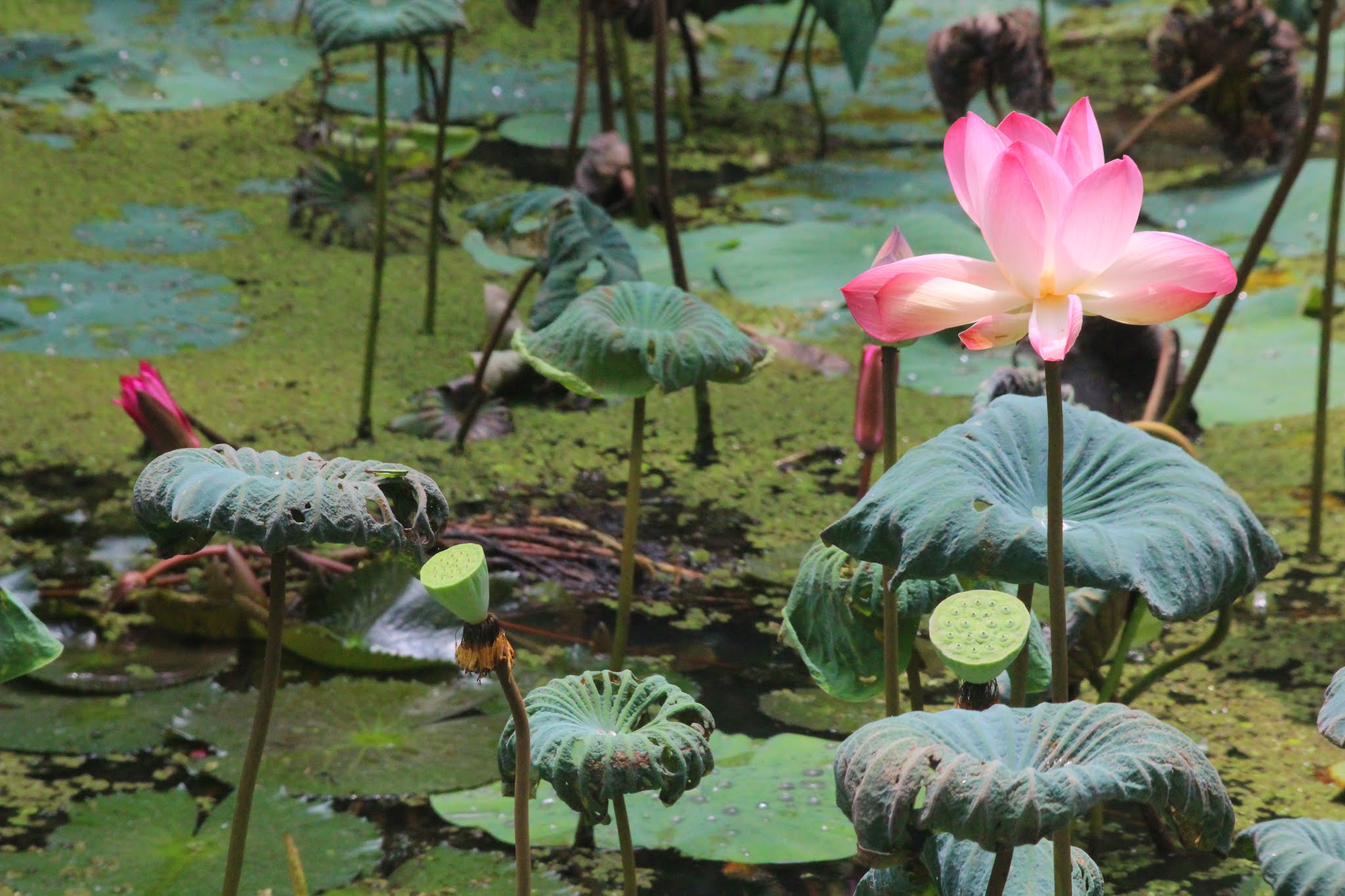
What the picture represents?

The meaning of this picture of the lotus pond is very deep. When I clicked it in Ranganathittu Bird Sanctuary  what caught my eye is the various stages of the lifecycle. It attracts me a lot.

Lotus has great symbolism in spirituality. It arose from the navel of Vishnu. It represents highest level of consciousness. The ब्रम्हरंध्र is represented by a thousand petalled lotus.

In the  Bhagavad Gita the human spirit is adjured to be like the lotus; one should work without attachment, dedicating actions to God, untouched by sin like water on a lotus leaf, like a beautiful flower standing high above the mud and water that represent the worldly experiences.

Sunday, May 31, 2020

Two Hands 2020


Finally after the huge hurdles due to #Lockdown the Two Hands event took place online. It was a good decision that the team led by the very passionate Preeti and Rajesh Deo took. 

Two hands is an annual charity event they host at their home in UK and it is in it's 5th year. The prep starts months in advance. 

This year early in Jan as Preeti started planning she disclosed to me the theme at the time she was knee deep into studying Nala paakdarpan. So she said this year she would base the theme on ancient texts and regional cuisine of Maharashtra. 

She assigned to me the task of making a 5 min video introducing the Koli cuisine. At the time I was recovering from a terrible month long cough that had an effect on my throat so excuse the groggy voice in the video. I tried to compensate it by dressing up. 

This little clip was my hands touching theirs to gather support and strength for the Impacct Foundation - Tata Memorial Hospital. 

Friday, May 29, 2020

SweetLime Cupcakes | Mosambi Muffins


This post is a dedication to my cousin sister Neelam. She stepped into her 50s yesterday.

A very simple girl. She and I grew up together and even though younger than me by 10 months she used to take care of me growing up a lot. She started cooking before me and was more responsible than me. At a young age a better cook than anyone in the family. 

An anecdote that family tells about us is that when we were babies 10 months apart I did not drink much milk so my bottle was given to her and she would suck up both hers and mine noisily. I was a bony baby she was chubby. She was vulnerable I was smart. Especially I knew how to escape our grandfather's pastings. That's our favourite memory to crack up to.

Then 5 yrs ago she had gone for a pilgrimage to Nashik. When she suffered deep vein thrombosis (DVT) and the blood clot travelled to her hand. In seconds it was black. Immediately she was moved to Mumbai and for 15 days doctors waited to see if they could revive it. Alas they could not and before sepsis set in they had to take a decision to save her life. It was a very hard time for family members to watch her go thru it. Finally she said she wanted to live for her young daughters. In that process she lost a limb.

Aai, me and Neelam

Since then She lives her life with strength and positivism. Still caring for her family. She doesn't show the struggle. We are fortunate that her younger sister in also married into the same family so she has her back.

Yesterday I had planned an online party for her. However due to several challenges in the family that party turned into a one on one call. Yet Dad and I went ahead and wished her. Showed her the SweetLime Cupcakes that I made and we ate later. I know it would have been such fun together.

The cupcakes turned out a little dense than I like but were nice and citrusy.

Here is the recipe if you wish to recreate.

Ingredients
1 cup maida / all purpose flour.
1.5 teaspoon baking powder
50gms white butter
1 cup SweetLime juice
1/2 cup milk
1 teaspoon zest
1/2 cup sugar, demerara

For icing
100 ml Amul fresh cream
1 tablespoon icing sugar
1 teaspoon Vanilla extract
1 teaspoon zest


Follow the video.

In a bowl mix in all wet ingredients and dissolve the sugar by whisking. Then add the baking powder and mix lightly. 

Add the zest. Next fold in the flour lightly into the liquid. The batter should be smooth.

Now line the muffin tray with cupcake cases. Spoon in 3-4 scoops into each pocket. Meanwhile preheat oven for 10 mins. I usually add this time to the time for baking and set the total time required. In this case we will bake for 40 mins in a bain marie so set the time at 50 mins at 160 degree celcius.

Put in a tray with 1 cup of water. place the muffin tray over it and bake. Check if baked properly by inserting a knife in the middle of the muffin. If the knife comes out clean it is done.

Cool completely for 12 hours before icing. 

Whip the fresh cream with icing sugar and vanilla extract. 

Top the muffins with icing to make them into pretty cupcakes. Sprinkle the zest over the icing.

Before serving place the SweetLime Cupcakes on a beautiful plate or cake stand. 


Happy 50th Budday Neelam!


Sunday, May 24, 2020

Aamba Barfi | Mango Fudge


When it is Hapoos season we are on a cooking baking high with the king of mangoes. Making Aamba barfi at home is so easy and you can control the sugar in it too unlike store bought ones which are extremely sweet and does not consider diabetics at all.

There are several Aamba barfi recipes that use milk powder and taste like dough but try this real burfi with Khava / Mawa and you won't like the milk powder vadis of the world. This Barfi is soft like Kalakand and delicate to taste.

For a short recipe like this lets not waste time, lets get going...

Ingredients

200 gms unsweetened khava / Mawa
1/4 cup of sugar
pulp of 1 Hapoos / Mango
1 handful of pistachios
6 cardamom pods
1 spoon of toop/ ghee

Collect all the ingredients on the counter. Crumble Khava and keep it ready. Mine was very moist so crumbled easily. If you have hardened khava pound it with a pestle.

Sliver the pistachios and keep aside. Peel the cardamom pods and pound the seeds to coarseness. Keep ready.

Pulp one Hapoos mango and keep aside, It should yield about 1/2 cup mango pulp. You can use any other mango which is fully ripe if you don't have access to hapoos. Hapoos has excellent color, flavor and fragrance hence it is the best. Remember whichever mango you use that will impart its characteristics to the Barfi like mentioned before.

Heat up a small fry pan and add 1 spoon of toop/ ghee. Melt it and then add khava to it. Fry till it becomes lump free. Khava is unsweetened but Mawa is sometimes sweetened so check it and then adjust sugar accordingly.

Now save little pistas for sprinkling on top. Rest major part add to the lump free khava. Mix to distribute evenly.

In a kadhai add the mango pulp and sugar and reduce it to compote thickness. The more you thicken it your effort for reducing along with khava is lessened.

Add the khava and reduce till the mass leaves the sides of the kadhai. Add the coarse cardamom powder and mix well. For this quantity it took me good 15-20 mins. Watch and listen to the sound in the video that tells you that the mix is ready to be removed from heat. Made in 30 mins.

I used a glass baking dish to cool this barfi but if you are using a metal plate or tray do grease it with toop.

Now remove the mix to the tray or glass dish and allow to cool over night. If it is set well cut into squares. I had to put it in the fridge to set for further 4 hrs to get neatly cut squares. Over few days the barfi sets firmly in the fridge as you relish it slowly.

Isn't it so easy peasy! Make it and tell me you accomplished making Aamba Barfi or Mango fudge.


Sunday, May 17, 2020

Our Stupid Reactions


After a very long time I found a good teacher and nurturer. Go straight to 12:33 then go and watch all over again. 

https://youtu.be/0RMPciauNAQ

When I started watching Our Stupid Reactions prima facia thought yeah yet another set of Americans doing reactions. Slowly I appreciated their insights. Especially Rick, he is so articulate. A teacher to the core. Then on many requests he started this series on 'Artistic Expression Vs Fine artistry'. A blessing for those of us who did not study Humanities. 

OSR is built up by the Stupid babies across India and the globe. Just the kind of art and artistry shared on this channel has opened our eyes to different corners of India that we were not aware about living in our bubble life. 

Rick and Korbin are so open to learning about India. They are in love with India. Rick found Indrani thru OSR and Korbin, what can we say about him, from not mentioning his wife on the channel to introducing Stefanie and his baby Leeland to The stupid family has been a journey of joy. Imagine he has learnt to eat with his hand that from detesting touching food. He is cooking Indian food in his kitchen. Yeah he has lots of us telling him the recipes are not all that authentic.

Such a lovely bond we have with both the Segall and Miles families.

This is a gratitude post. Keep entertaining us and teaching us in the process 🙏🏽


Wednesday, May 13, 2020

Dhekaas Recipe, After the Live Event


Presenting to you a cake from our Koli repertoire that has all your fancy tags #glutenfree #fatfree #veg and #nosweat recipe. You did not expect it right? 

Made this on the live today with @historywali for her fabulous series #Historyonaplate I loved to see all my friends cheering me on. Asking so many questions some we could answer as they were about the recipe and some about culture and anecdotes I will answer at leisure on #talkativeanjali going forward. 

I briefly did an intro of Koli cuisine. Reminiscing about my grandpa through it as I highlighted the risk and skill involved in the lives of Kolis. The heartwarming memory behind the dish I made today Dhekaas. The socio-cultural significance of the ingredients used. 


Here is the recipe for you to recreate it.

Ingredients

1 cup broken rice, Kani in Koli
Half cup powdered jaggery
Half cup fresh grated coconut
1 teaspoon ginger powder/ sunth

In a vessel preferably a shallow pan cook the broken rice with equal amount of water. The rice should be fluffy. I used Pressure cooker today to cut time on live.

After cooking the broken rice. Mix in powdered jaggery, fresh grated coconut and ginger powder in and mix well. Cook on heat till it starts leaving the sides of the vessel. Switch of heat. Traditionally it was baked on embers on top and bottom. Bake in the oven at highest temp till you get a golden top. About 15-20 mins. Let it cool completely. Overnight is better. 

Serve it slightly warm with cold moulded white butter or ghee. I added jaggery coated cashews for texture on the side. 

Enjoy a piece of oral Koli history through my trip into nostalgia!

Those who attended the live a huge thank you and those who missed it you have the next whole day to watch it on Shubhra's stories. I would like to hear back from you. If you make this Koli style cake called Dhekaas in your kitchen it would be a big thrill for me to see your takes on it. So go ahead and post pictures and tag me. This time I am all open to tags 😁


Monday, May 11, 2020

Making Dhekaas On History On A Plate


Catch me live tomorrow 12 May with @historywali on her series 'History on a plate' which is a current rage on Instagram and is in it's week 4. Will share an old world treat that is almost lost in time. See you.

Sunday, May 10, 2020

Thoughts on Mother's Day 2020


Mothi Aai, My Aai and Devaki Kaki

Reading everyone's tributes to their Moms. I have very complex feelings.

1. The circumstances in my home made my Aai go to live in Thal when I was 14yrs old. So in that sense I became independent then on. Taking care of myself. Trying not to be a nuisance to others in the family. Trying to help out as much as possible. I have been a straightforward person so it's been difficult dealing with everyone and the power dynamics in joint families. When Aai came back with what initially looked like stomach ache and we found out it was Ovarian Carcinoma of grade 3. I just did not allow anyone else to take care of her not even my Dad. She did not expect it from me. I assured her these were her sanvskar. She passed away within 25 days of diagnosis, 18 blood transfusions that resulted in a massive heart attack. It's 26 yrs. It's been a tough journey without her.

2. We lost Devaki Kaki 2 yrs after my Aai. Our family suffered blows after blows. S was barely in the 8 Std. H moved with me and Dad to Nerul home after couple of years. After another 2 yrs S joined us along with P Kaka. I was responsible for 4 men. I was working as an Environmental Engineer at that point. Travelled every 2 days to Industrial areas in Maharashtra and Gujarat. I cooked, cleaned and kept the house. I asked for help from all 4 men. Got some flak for it. I tried to be a mother and it was not easy. I was only 28 when I started being. The responsibility and my younger uncle's ideology of no kids had a huge impact on me. I never dared to have kids of my own. Many times even when I wasn't married I pondered on adopting but did not act on it. I never had the courage to become a Mother.

Sunday, May 03, 2020

Khari Puri


Khari Puri or Farsi puri is a snack from my childhood that features topmost in my favourites. I have Rajput kaki to thank it for. She was an amazing cook and even though we lived in the business district of Mumbai between late 70s to late 80s she cooked some food on the sigdi. That added a beautiful fragrance to her food. Thalis laden with wonderful dhoklas, khari puri, shrikhand puri, raswala bateta etc appeared on festivals from her kitchen. I knew exactly what her menu would be for each festival. It was mostly during Diwali times that we kids helped to make snacks. Together with Preety we were give the task of slashing the puris with a knife. We weren't too good with rolling out puris. That would be done by Induben and Ji aaji. Slashing the puris was fun and a task we enjoyed. Today I was feeling low. So to snap out of it I decided I need to do something therapeutic. Khari Puri project at 9 am is a good thing. I also started recording videos for Talkative Anjali but I made the mistake of pouring in the water all together. Then I had to fix it by added more flour. The consistency of the dough is key to the success. So here is the recipe after a successful project.

Ingredients

2 cups maida 
1/4 cup Rava prefer fine
4 tablespoons ghee
1 teaspoon cumin seeds
2 tablespoons whole peppercorn
Salt to taste
Oil for frying

In a big bowl measure out the maida and rava. Fine rava works better as it will soak up water nicely. Add cumin, salt and ghee. Massage the ghee into the flour to get a crumbly texture. Use both hands to get the ghee into the flour. 

Next take a cup of water. Using little at a time keep kneading the dough. It has to be a flaky tight dough which is required to make the puris crisp and give it shelf life. Cover the bowl with a lid and let it rest for 20 mins. 

Go back and check the dough. The rava would have bloomed with water and the dough should feel supple. Knead it to homogenise the rava and maida. Divide this smooth dough into three parts. Make cylinders of 12 inch length. Cut small pieces of dough roundels. Roll out each roundel into a Puri. The Puri should be nicely thin so when you fry it will turn crisp and stay crisp on storage. You should not need any flour or oil to roll out the puris. That is the sign of perfectly kneaded dough. After rolling out the puris lift it up from the polpat or the counter on which you are rolling it so that it does not stick to the rolling surface. Then place the whole peppercorns on the puri, spacing out properly. Smash the peppercorns with a pestle into the Puri. Now lift the Puri and move it to a weaner or a plate so that you can make a few puris before you start frying. I fried 4 puris in a batch. So that the oil is not crowded. I used s medium-sized cast iron kadhai for frying. You decide how many puris you can accommodate in your kadhai based on this.

Heat oil in the kadhai keep gas on medium. Put 4 puris at a time and reduce heat to sim. Make sure the heat is even and enough for frying. Allow the puris to fry on one side till a beautiful golden and then turn over. The timing for frying is the time required for you to roll out the puris and smash the pepper into it. Do not roll out all puris together else they dry out before frying. After both the sides are golden drain using a slotted spoon and remove into a colander lined with absorbent napkin. I have stopped using paper napkins as an environmental responsibility. I use cloth napkins and wash and reuse them. 

In such a way fry all the puris and use up the dough. It took me 2hrs for this Khari Puri project from start to finish. However all the effort was rewarding in the end when I tasted the Khari Puri. It was so good just like Kaki's. Plus after all the sweet stuf I made and we ate this was just the thing we needed. 

Some of you have requested this recipe so posting it in a rush. I will create the video when I make the next batch. Until then make and fry fearlessly. Enjoy!


On Trail